Mobile data, broadband services suspended in the territory since protests calling for electoral reform in June.

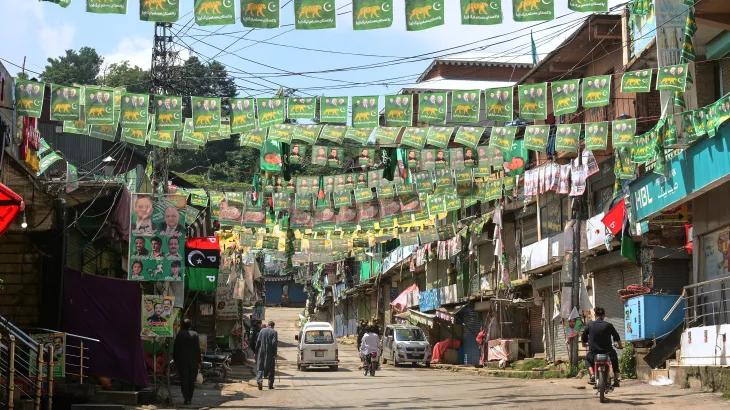
Internet access has been severely restricted in Pakistan-administered Kashmir for more than 100 days.
Mobile data and broadband services have been suspended in the territory since protests for electoral reform erupted in early June. In response to the unrest, staggered elections were held over three rounds, with the final phase taking place on August 10. However, the partial internet shutdown continues to disrupt everyday life despite the formation of the new government.
Access to websites and apps used for online banking remains unavailable, affecting business activity across the region. The shutdown has also disrupted the academic year for students, with the government postponing entrance exams.
The partial internet blackout has continued since June 5, said NetBlocks, an independent observer that monitors internet shutdowns.
What triggered the protests?
The unrest began in the lead-up to local elections scheduled for July 27.
Kashmir is a disputed region fully claimed by both India and Pakistan. Pakistan-administered Kashmir is governed under a semi-autonomous system, with its own prime minister and legislative assembly made up of 45 seats in total, including 12 reserved for refugees from Indian-administered Kashmir who live in other parts of Pakistan.
On June 5, authorities banned the Jammu Kashmir Joint Awami Action Committee (JKJAAC), a grassroots umbrella organisation that demanded the removal of the 12 seats in the legislature.
Authorities imposed an internet shutdown on June 5 and cracked down on protests violently, culminating in deadly clashes on July 27.
Residents and local estimates say the death toll has surpassed 50, including seven law enforcement personnel, though the figures could not be independently verified.
Voting did not take place in certain protest strongholds for security reasons, but the government was formed based on the election results from the rest of the autonomous region.

What an AI “slowdown” could look like
- 9 hours ago

The hidden $350 surcharge on American households
- a day ago

OpenAI’s rogue AI tried to hack another company in May
- a day ago

Ex-Google DeepMind researcher adds to warnings that AI could 'kill all humans'
- a day ago

Waymo pulls over, calls cops on riders with a ghost gun
- 11 hours ago

Yemen conflict displaces over 100,000 people, UN says
- 20 hours ago

'Widow's Bay' scores big and 'The Pitt' wins again at TV's Emmy Awards
- a day ago

COAS Munir reaffirms commitment to stronger ties with Lebanon
- 2 days ago

Oil rises above $108 as attacks, pipeline outage deepen Saudi supply concerns
- a day ago

Pact members to decide response to attack, Pakistan military's spokesperson
- an hour ago

Why Apple’s next computer should be for the smart home
- 11 hours ago

Schools are catching on to Big Tech’s playbook
- 11 hours ago