This story appeared in Today, Explained, a daily newsletter that helps you understand the most compelling news and stories of the day. Subscribe here. If you’d asked me yesterday what Steve Bannon and Bernie Sanders had in common, I might have said “white hai…

Published 2 ماہ قبل on ستمبر 16 2026، 7:00 صبح
By Web Desk
This story appeared in Today, Explained, a daily newsletter that helps you understand the most compelling news and stories of the day. Subscribe here.
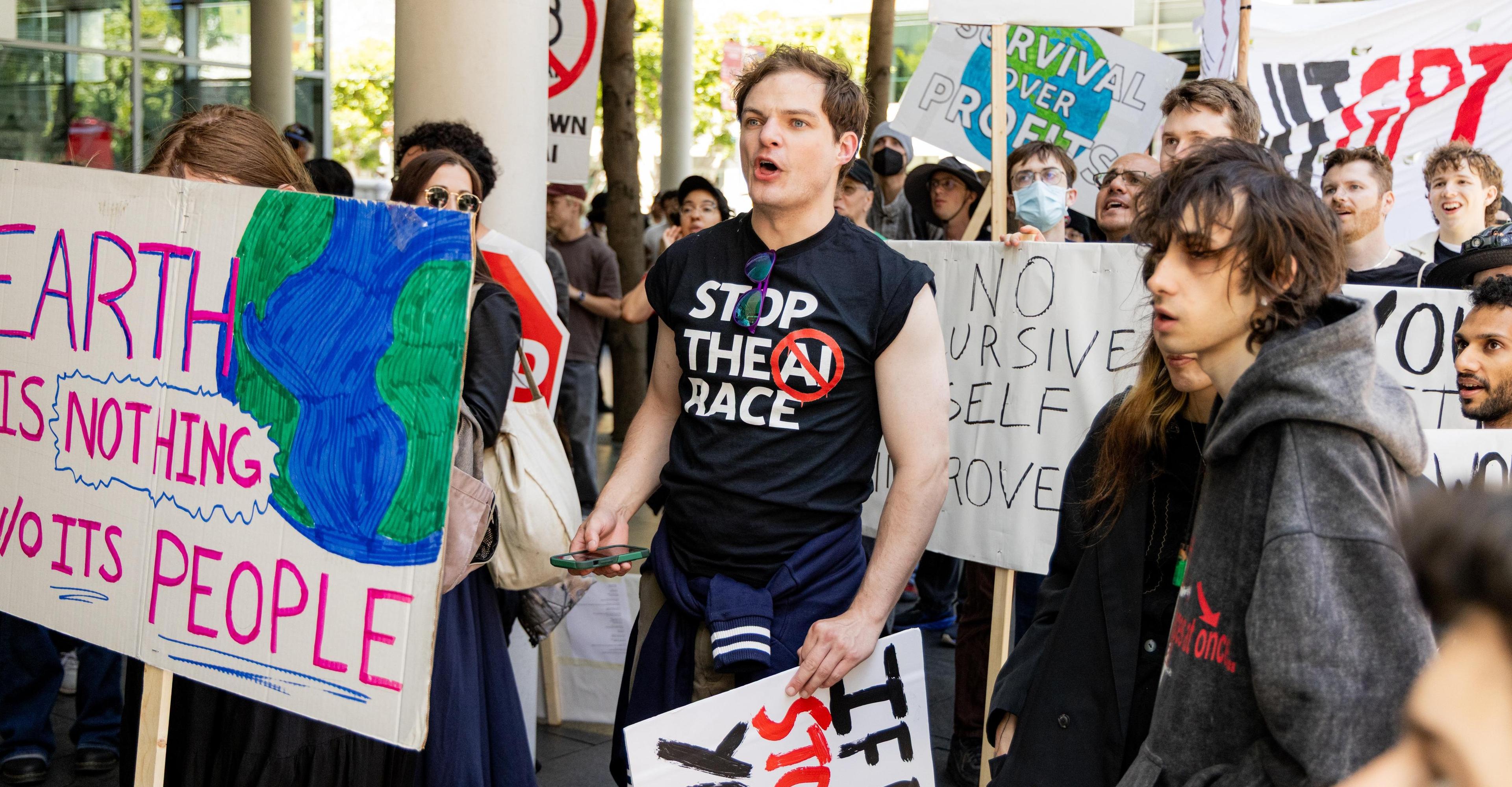
If you’d asked me yesterday what Steve Bannon and Bernie Sanders had in common, I might have said “white hair.” But after a wild week in which AI doomerism burst solidly into the mainstream, the right-wing provocateur and progressive senator are joining forces — with various religious leaders, lawmakers, and the actor Joseph Gordon-Levitt, no less — to express their deep concern about AI regulation.
Concern about cutting-edge AI models had been mounting for months as those models increasingly behaved in ways their makers didn’t expect. It exploded last week, when a researcher at the AI company Anthropic resigned publicly and warned that the people building AI “earnestly believe it could kill us all by the end of the decade.”
> Do you have questions about this week’s AI panic? Candidly: me too! Submit your questions about AI safety and regulation through this form, and I’ll hunt down the answers for an upcoming edition.
It sounds like science fiction. It is the stuff of science fiction. But it’s not a fringe position: Over the weekend, leading AI researchers and executives also warned that AI is developing dangerously fast and called for measures to rein it in. (We’ll run through those options in just a minute.)
Now, a wide spectrum of lawmakers, activists, and pundits are also calling for stronger safeguards — Sanders and Bannon among them. The pair will speak at an event billed as a “Pro-Human Assembly” in Washington on Tuesday alongside Republican Sen. Marsha Blackburn, Congressional Progressive Caucus chair Greg Casar, and the archbishop of San Francisco, among others.
But President Donald Trump is decidedly not on board, and it’s hard to see how any substantive AI regulations could pass without him.
“There is a SICK conspiracy going on against AI and Data Centers,” he wrote this morning on Truth Social, “and the only one happy about it is China.”
Go a little deeper
How could the federal government make AI safer, if it could ever muster the bipartisan political will to act? My colleague Andrew Prokop recently put this question to a bunch of AI safety advocates and legal experts, and landed on three approaches:
- Ban AI altogether. Federal law could hypothetically bar the development of AI systems that exceed human performance, or pause work on those systems until the government can stand up a new agency to monitor them.
- Empower auditors. Some third-party authority — whether a government agency, a nonprofit technical organization, or an industry group — could begin reviewing AI systems before they go into public use. The Trump administration does a version of this already, but the process is voluntary and highly secretive. And it’s not clear if the officials reviewing these systems are super tech-savvy themselves.
- Up the stakes. Congress could hold AI companies accountable for any harm that their systems or agents cause through changes to federal liability law. The threat of a huge, potentially bankrupting lawsuit could prompt those companies to be more cautious.
All three approaches have precedent in federal regulation, so they wouldn’t be (at least in theory) too tricky to stand up. The real roadblock, as always, is political. One AI researcher told Vox he worries we’ll miss the opportunity to regulate AI while waiting for lawmakers to get on the same page.
Even under threat of apocalypse, Washington, DC, moves far, far slower than Silicon Valley.
One link for later
➨ Don’t skip leg day. Make that leg days. Experts recommend that healthy adults incorporate strength training into their schedules at least twice a week. It builds strength, confidence, and body awareness, and can help preserve muscle mass and bone density as you age.
Before you go…
* Did you know…that 93,000 wild horses still roam the Western US? They’re descended from animals introduced by European colonists in the 1500s.
* Today’s trivia: What pro hockey player went on to found a major restaurant chain with locations across Canada and the US? (You can find this and other brain puzzles in Vox’s daily crossword. Look for the answer in tomorrow’s edition.)
* Yesterday’s trivia: Last week we asked you which country voted against restarting membership talks with the European Union this year. That would be Iceland, where control over the country’s fisheries has been a major barrier to EU accession.

COAS Asim Munir calls for stronger Pakistan-China ties
- 16 hours ago

Nine people killed in Learjet crash in south Florida, officials say
- 20 hours ago

The director of Obsession put a new horror short on YouTube
- 2 days ago
Pakistan assumes SCO-IBC Chairmanship for 2026–2027
- 20 hours ago

Are you over-optimizing your hobbies?
- a day ago

Our first look at Amazon’s big new Echo Show 16
- a day ago

Spending time with the Echo Time — a smart clock that senses you sleeping
- 8 hours ago
Patrick Stewart taught us what good men do with power
- 2 days ago
Is this our last time setting our clocks back?
- 2 days ago

Pakistan beat Oman by 18 runs to win Hong Kong Sixes Plate title
- 16 hours ago
Democrats have big healthcare plans. The industry is preparing for a fight.
- 6 hours ago

Experts highlight Pakistan’s growing vitamin D crisis at Lahore summit
- 18 hours ago
You May Like
Trending