When he first emerged on the political stage more than a decade ago, Donald Trump made closing America’s borders and remaking our immigration system a central plank of his agenda. A year into his second administration — and as this week’s events in Minneapol…

Published 9 months ago on Jan 11th 2026, 7:00 am
By Web Desk
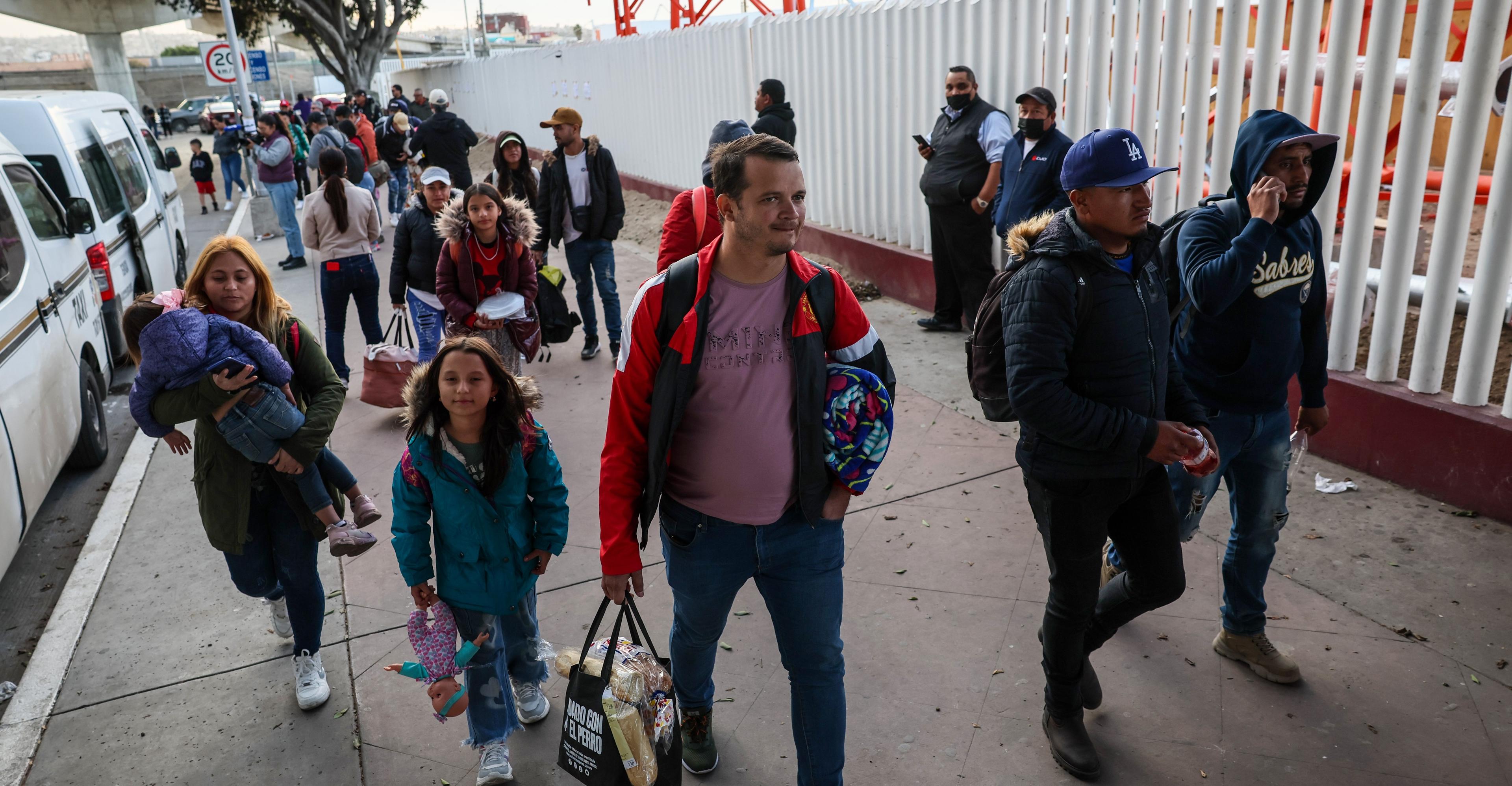
When he first emerged on the political stage more than a decade ago, Donald Trump made closing America’s borders and remaking our immigration system a central plank of his agenda.
A year into his second administration — and as this week’s events in Minneapolis underscore — the issue has defined his presidency and changed America’s trajectory.
Perhaps one of the most consequential moves on that front has been his dismantling of our system of asylum: the process by which immigrants can legally enter the country if they fear violence or persecution. Trump has moved aggressively to curtail asylum-seekers’ entrance into the US, as well as to force ones already in the country to leave.
Today, Explained guest host Miles Bryan talked to ProPublica immigration reporter Mica Rosenberg about how the Trump administration has made life harder for asylum-seekers, how the system broke under Joe Biden, and what the changes in the US might spell for the rest of the world.
Below is an excerpt of their conversation, edited for length and clarity. There’s much more in the full podcast, so listen to Today, Explained wherever you get podcasts, including Apple Podcasts, Pandora, and Spotify.
What was the Trump administration’s mindset about asylum coming into 2025? Under US law, people are allowed to show up at our border and request asylum if they fear returning to their home countries. But that actually triggers a very long court process in the US that can take years to resolve.
Trump and his advisers really view this system as kind of like a giant loophole. They believe that most people who are coming into the country this way are not legitimate asylum-seekers, and they’re maybe coming for economic reasons. They’ve really come into office with a blitz of policies to try and shut that system down.
And that includes things that they’re doing at the border, which is quickly turning people back to Mexico — and, in some cases, sending them to third countries like Panama or Costa Rica or even farther, locations that they’ve never been to, and not giving them a chance to seek asylum here.
How important are those “third country” deportations to the administration’s overall policy?
This is really one of the most novel and surprising things that the Trump administration has tried.
For years, multiple administrations have struggled with a particular issue of countries that have refused to take back their own nationals as deportees. During the first Trump administration, he forged agreements with some Central American countries to take back some deportees from different nationalities — mostly regional migrants, and they didn’t really get very far.
This time around, [the administration has] really ramped up this strategy significantly. They’ve signed these types of agreements with around 20 countries, including really far-flung ones like South Sudan and Uganda.
In one of the most audacious and consequential deportations so far of Trump’s presidency, he sent close to 230 Venezuelan nationals to a maximum security prison in El Salvador. He accused them of being the worst of the worst, gang members. Our reporting at ProPublica and with Venezuelan reporting partners found that the government knew that the vast majority of these men had never been convicted of any crimes in the United States, but they were rounded up and whisked away to this prison, where they were held for months before they were released in a prisoner exchange.
This is something that has never really been tried before at this scale. And it’s being challenged in court. But it’s very difficult to challenge because once these people are outside of the United States, they’re mostly outside of the jurisdiction of US courts. So it’s leaving a lot of people in very precarious situations.
I think it’d be helpful to kind of remind everybody, including myself, what this system and the process looked like before Trump started blowing it up. Can you paint us a picture of how this was working under the Biden administration?
During the Biden administration, this phenomenon of people arriving at the border and turning themselves in to border officials to claim asylum really exploded under the Biden administration. The people that were coming and asking for refuge were overwhelming border stations, and many ended up being released into the country to make their claims in immigration court.
What qualifies you for asylum is a really sort of narrow band of reasons. It’s granted to people specifically who fear persecution because of their race, their religion, their nationality, their political opinion, or membership in a particular social group. The system’s really been set up in the past acknowledging that those things can be very difficult to prove (especially if you’re fleeing out of fear, you might not have all of the proof that you need).
That’s why the court system was set up in this way. It was supposed to give people time to gather evidence, to make their claims. I think there are a lot of people who were arriving at the border who really did have legitimate asylum claims. They’re fleeing for their lives. They’re facing political persecution. But mixed in there, I think, are people who are coming for other reasons. They’re facing serious economic hardship or violence or political and economic breakdown in their home countries.
What the Trump administration has done, by believing that almost all of the asylum claims are fraudulent or not legitimate, they’re really sort of throwing the baby out with the bathwater. And advocates are saying that these changes have made it nearly impossible for legitimate asylum-seekers to really get protection.
How do people in countries far from the United States find out or come to believe that flying to Mexico and then trekking to the border and then waiting at the border and then maybe turning themselves in was going to lead to a better life?
I think it’s very different for every nationality and every group. There were WhatsApp groups, there were TikTok influencers who were advertising different routes for making it to the United States.
People from countries deeper in South America, in India, and parts of Africa started understanding that they could come to the border and claim asylum and potentially be released to pursue their claims. There were hundreds of thousands of people who were making a perilous trek on foot through the dangerous jungle between Colombia and Panama.
African and Indian migrants were going into debt for tens of thousands of dollars to pay for commercial and charter flights into Nicaragua and then to make their way through Mexico.
Is anyone still getting asylum? Is this still happening at all, or has Trump just turned the tap off completely?
Well, the Trump administration’s goals of sealing off the border are really being accomplished in many ways. Border crossings have dropped to record lows, and releases of people into the country to try and go through this court process have also really dropped. There has really been a reduction in the ability for people to seek protection here.
So you’re telling us this story of huge swings in our asylum policy. It seems like a big reason that those swings are possible is because the policy is being set with executive orders. Do you think there’s any possibility that Congress is going to actually make any meaningful changes to our asylum system?
Well, everyone says that we are where we are right now because Congress for decades has never gotten around to passing any really meaningful, comprehensive immigration reform. We’re working with an outdated system. Each president that comes in basically makes immigration policy through fiat and executive actions. And those can be challenged in court. They can be quickly overturned if a different party comes into office.
This is something that would take real, meaningful, bipartisan action. There have been efforts that came really close in the past where there were groups on both sides. I think it really doesn’t look good for congressional action at this point.
How should we think about all these people who have historically sought out the United States for asylum who now cannot? Are they going to other countries? Is there going to be another nation that becomes the shining city on the hill?
All of these changes are happening at a time where there’s really an unprecedented explosion of people fleeing conflicts all over the world. Trump is part of a wave of politicians who have capitalized on concerns about rising immigration. Politicians in places like Europe or even Canada have embraced some of the views that the Trump administration has about tamping down on migration, limiting access to asylum.
Many countries in the past have really felt compelled to follow the US lead on issues of human rights and protecting asylum-seekers. But now, these countries may end up following the US lead in the opposite direction.

Pakistan Customs foils smuggling attempt at Islamabad Airport, seizes contraband worth Rs660mn
- 13 hours ago

Security forces kill 33 terrorists in Balochistan: ISPR
- a day ago
WHO renews commitment to support Pakistan in fight against childhood cancer
- a day ago
More Republicans are breaking from Trump. Is it too little, too late?
- a day ago
Susan Collins is the abortion rights movement’s biggest test of 2026
- a day ago

A sinkhole swallowed Nicolas Cage’s driveway. Yours might be next.
- a day ago
Why Americans are warming to China
- a day ago
PIA faces over Rs10mn in baggage delay penalties at airports across Pakistan
- 13 hours ago
China, US agree to $30bn tariff cut, AI dialogue during Xi visit
- 15 hours ago

Malaysia beat Pakistan by 5-4 goals in Asian Games match
- 10 hours ago

Pakistani, Saudi, Turkish military chiefs discuss ways to back KSA under Makkah defence pact
- a day ago

Any attempt to divert Pakistan's share of waters will be treated as an act of war: PM Shehbaz
- a day ago
You May Like

Trending