Every child is a public trust—and the state is the ultimate guardian

Dr Arsalan Malik
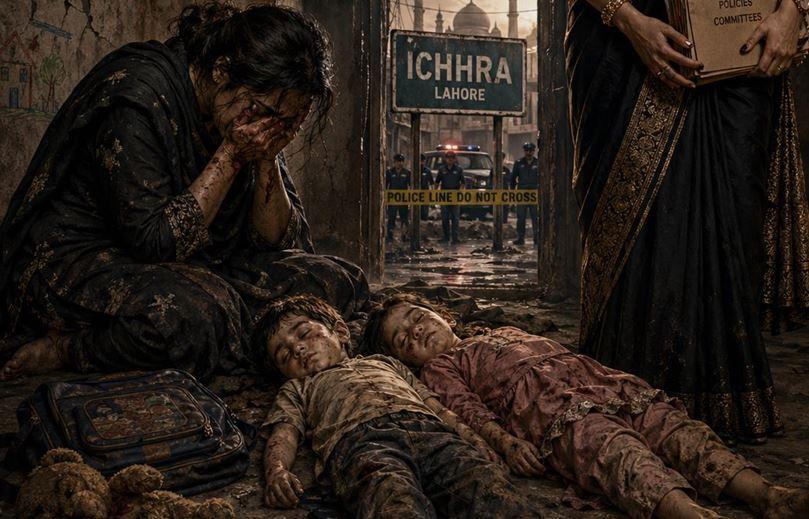
The children of Ichhrah were not killed by one mother. They were killed by two. One was the mother who gave birth to them. The other is the mother that calls itself the state: the mother that collects taxes, prints promises in the Constitution, builds departments, launches helplines, cuts ribbons, issues press releases, and then looks surprised when children are found dead inside homes that had already become prisons of fear, hunger, violence, custody warfare, and untreated mental distress.
The first mother will face the police, the court, the media, and criminal law. But what about the second mother? What about the state that did not know that these children were frightened, trapped in parental conflict, exposed to violence, and living in a house where danger had already announced itself long before it became a crime scene. The tragedy of Ichhrah is not merely a murder case. It is a post-mortem of a dead governance.
Ichhrah is not an isolated tragedy
In March 2026, in Okara, a woman allegedly threw her four-month-old son into a canal. In September 2025, in Faisalabad, a toddler was allegedly thrown into the Rakh Branch Canal and survived. In May 2025, in Gujrat, a mother reportedly confessed to killing her young son and daughter in the context of a second-marriage relationship.
In August 2024, near Bahawalpur, a woman allegedly died by suicide with two minor children by jumping before a train. In May 2024, also in Bahawalpur, a father allegedly killed two young daughters when a court bailiff came to recover custody for their mother. In April 2024, in Muzaffargarh, a man allegedly killed his wife and seven children.
The list runs through Muzaffargarh, Lahore, Multan, Burewala, Gujrat, Okara, Faisalabad, Bahawalpur, and other parts of Punjab: children thrown into rivers and canals, dumped in water tanks, drowned, poisoned, slaughtered, or killed in the name of honour, revenge, despair, custody conflict, domestic breakdown, poverty, social abandonment, and adult collapse.
A child is public trust, not private property
A child is not private property. A child is not the emotional possession of a mother, father, grandfather, step-parent, or guardian. A child is not a bargaining chip in a custody dispute. A child is not a punishment tool against an ex-spouse. A child is not an obstacle to a second marriage. A child is not a sacrifice at the altar of honour, ego, superstition, poverty, clan pressure, or revenge.
A child is a public trust. Parents are the first guardians, but the state is the ultimate guardian. That is the moral foundation of child protection. When the home is safe, the state may remain in the background. But when the home becomes a place of fear, hunger, violence, neglect, coercion, mental breakdown, or suicidal threat, the state cannot pretend that it has no door to knock on.
The state cannot say, ‘We did not know.’ Its job is to know. It knows who owns a car. It knows who has not paid tax. It knows who crossed a toll plaza. It knows who applied for a CNIC, passport, driving license, land transfer, electricity meter, gas connection, mobile SIM, or vehicle registration. It can track vehicles, tax defaulters, electricity thieves, and traffic violations.
But on other side a child is showing distress in class for weeks. A child is trapped in a high-conflict custody dispute. A child is repeatedly seen with trauma symptoms. A child is living in a household with domestic violence complaints. There is a child whose parents have threatened suicide. There is a child whose home has become a battlefield. And when news of that child's death begins flashing on screens, the mighty state suddenly becomes a confused old clerk rummaging through a missing file.
The state mother failed to respond to her children
The state is the second mother: the mother that taxes, promises, regulates, records, polices, registers, educates, vaccinates, and claims legal guardianship over public order. If a child is hungry, the state has a duty. If a child is without clothing, the state has a duty. If a child is unsafe at home, the state has a duty. If a child is emotionally crushed between separated parents, the state has a duty.
At present, child protection system is mostly reactive. It wakes up when someone complains. It moves when someone calls. It becomes visible when a child is found, rescued, injured, abandoned, abused, or dead. Until then, the child remains administratively invisible. The system waits for the child to bleed loudly enough. But small children do not file petitions. A toddler does not call a helpline. A five-year-old does not draft a complaint to the Child Protection Bureau. A frightened child in a violent home does not understand risk indicators, custody law, police procedure, or social welfare forms.
Divorce, separation and the silent torture of children
One of the most neglected categories is the child of separated or divorced parents. These children often live in emotional war zones. One parent may prevent contact with the other out of revenge. One parent may use the child to punish the ex-spouse. The child is forced to choose sides before knowing what a side even is. He is told that his father is cruel, or that his mother abandoned him. She is dragged from court to home, from home to stuffed visitation rooms, while adults call this custody.
In reality, many custody disputes are not about the welfare of the child. They are about adult possession. Family courts decide custody, visitation, and guardianship, but the child’s emotional life often remains unexamined. Does the child sleep properly? Has school performance declined? Is the child afraid of one parent? Is the child being coached? Is the child being denied contact with a loving parent? Is domestic violence present? Is there risk of abduction, suicide, revenge, or self-harm?
The old social safety net has collapsed
There was a time when the neighbourhood knew the child. Relatives lived nearby. Grandparents intervened. The street had eyes. This old system had many injustices of its own, but it did provide some informal surveillance of family distress. That world has changed. Urban life has created anonymous neighbourhoods. Families live in rented rooms, flats, and crowded settlements where nobody knows anyone deeply. Migration has weakened kinship support. Nuclear families are isolated. Poverty hides behind shame.
Mental illness hides behind stigma. Domestic violence hides behind the phrase ‘private matter.’ Children live behind locked doors, screens, silence, and fear. When informal safeguards collapse, the state must build formal safeguards. That is what governance means. Formal safeguards mean trained people, legal duties, digital systems, field visits, school reporting, health-sector reporting, police coordination, family-court integration, emergency shelters, child psychologists, and district-level accountability. The old mohalla is gone. The new state has not arrived. Children are dying in the gap.
Punjab needs a child risk registry on urgent basis
Punjab does not need another emotional statement after another child’s death. Punjab needs a Child Risk Registry and Protection Monitoring System. This is not fantasy. The province already has digital policing systems, school databases, hospital records, CNIC-linked family data, safe city infrastructure, helplines, court records, and local administration networks. The issue is not technology. The issue is whether children’s lives are important enough to connect the technology to field action.
Schools, hospitals and clinics must report risk
Schools are often the first institutions to detect distress. A child who becomes withdrawn, aggressive, hungry, injured, absent, sleepy, dirty, or fearful is not merely a discipline issue. That child may be sending the only distress signal available. Every school should have a child safety protocol. Teachers should be trained to identify neglect, abuse, domestic violence exposure, severe poverty, emotional collapse, and custody-related distress. Mandatory child protection reporting must apply to public hospitals, private clinics, emergency rooms, mental-health practitioners, and lady health workers. A parent in crisis with children in the home should trigger emergency child-safety assessment. A mother in severe distress should be helped, not merely judged. A father making violent threats should be risk-assessed, not dismissed as merely angry.
Family courts need child welfare units
Family courts are not merely places where parents fight. They are places where children’s futures are quietly shaped, often without anyone listening properly to the child. Unfortunately, in Punjab, visitation courts and custody processes often function in conditions that are unworthy of children whose lives are being decided inside them. Every family court should have a Child Welfare Unit. It should include a child psychologist, social welfare officer, trained mediator, and child protection liaison.
In high-conflict cases, the court should receive periodic reports on the child’s emotional health, schooling, visitation experience, safety concerns, and parental conduct. Every custody dispute should trigger child welfare monitoring: mandatory child psychologist assessment, parenting capacity evaluation, domestic violence screening, supervised visitation where needed, follow-up reporting, and penalties for using the child as a weapon.
A parent who blocks lawful visitation out of ego should face consequences. A parent who turns the child against the other parent should be assessed. A parent with violent tendencies should not receive unsupervised access without risk review. A parent threatening suicide or harm should trigger emergency intervention.
What Ichhrah tragedy demands
The children of Ichhra do not need only tears. They demand a provincial child risk registry. They demand mandatory reporting. They demand family court child welfare units. They demand district child safety boards. They demand social-worker visits. Children of Ichhra demand child death review boards. And it demands one more thing: that we stop pretending that child murder inside a home is only a family tragedy. It is also an institutional warning. When children repeatedly die in similar patterns, the question is no longer only ‘Who killed them?’ The question becomes: ‘Who kept failing to protect them?’
The final question
The children of Ichhra are buried now. So are the children of Muzaffargarh, Multan, Bahawalpur, Lahore, Gujrat, Okara, Faisalabad, and Burewala. But one question remains alive: Will the next child be seen while still breathing? Or will the state mother arrive again with condolences, cameras, committees, and a file, after another small dead body has already told us what our institutions refused to hear?
-- Dr Arsalan Malik is a Ph.D. Research Scholar in Sociological Criminology, a Fulbright Alumnus in Forensic Science and Criminal Justice, and the Founding Director Project Innocence. He can be reached at malikaaarsalan@gmail.com.

Ashrafi receives ‘The Hubert Walter Award for Reconciliation and Interfaith Cooperation 2026’
- 2 days ago
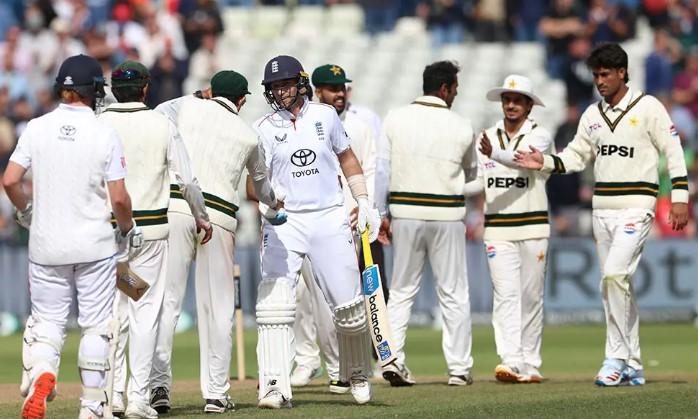
Root takes charge, guiding England to series whitewash over Pakistan
- 2 days ago

Quaid-e-Azam Muhammad Ali Jinnah’s death anniversary observed
- 3 days ago

New York marks 25th anniversary of 9/11 attacks
- 3 days ago

The cost of youth sports is out of control
- a day ago

Gaza film, Malkovich drama vie for Venice top prize
- 2 days ago
Pakistan condemns drone attacks on KSA’s East-West Pipeline
- 2 days ago

CJP emphasises district judiciary’s role in building public confidence
- 2 days ago

How to be an ethical gossip
- 4 hours ago

The one problem Trump can’t afford
- 2 days ago

The Supreme Court just handed Republicans a surprisingly decisive midterm loss
- 2 days ago

How the iPhone Duo compares to other folding phones
- 2 days ago