Physicist Steven Weinberg, who won the Nobel prize in 1979 with two other scientists for their separate contributions unlocking mysteries of tiny particles and their electromagnetic interaction, died at the age of 88, the University of Texas at Austin said Saturday.

A professor at the university since the 1980s, Weinberg died Friday in Austin, Texas, according to his wife Louise, said UT spokesperson Christine Sinatra. The physicist had been hospitalized for several weeks, but a cause of death was not released, according to Sinatra.
“The passing of Steven Weinberg is a loss for The University of Texas and for society,” UT President Jay Hartzell said in a statement.
“Professor Weinberg unlocked the mysteries of the universe for millions of people, enriching humanity’s concept of nature and our relationship to the world,” Hartzell added.
In 1979, Weinberg shared the Nobel prize in physics with scientists Abdus Salam and Sheldon Lee Glashow. Their work improved the understanding of how everything in the universe relates, according to a UT statement.
The work helped physicists unify two of the four forces of nature, subatomic forces known as nuclear forces, said Sean Carroll, a theoretical physicist at the California Institute of Technology.
“It’s all about understanding the laws of nature at a deep level. We’re curious creatures and we want to know how the universe around us works,” Carroll said.
Weinberg’s work built on the work of Albert Einstein, according to Columbia University string theory physicist Brian Greene.
“The idea was that all forces of nature might actually be the same force ... it was this dream Einstein had, that it all might be whole,” Greene said. “He drove this idea forward. He pushed this idea forward by showing (two forces) were the same force.”
Weinberg, Salam and Glashow — working separately — were honored “for their contributions to the theory of the unified weak and electromagnetic interaction between elementary particles, including ... the prediction of the weak neutral current,” according to the Nobel Prize website.
A New York native, Weinberg was a researcher at Columbia University and the University of California, Berkeley, earlier in his career. He then served on the faculty of Harvard University and the Massachusetts Institute of Technology before joining the UT faculty in 1982, teaching both physics and astronomy.
Weinberg left behind wife and a daughter. The heirs has yet to announce the funeral services.
SOURCE: AP

Why diesel prices are an economic time bomb
- 5 hours ago

Anthropic warns of ‘catastrophic’ AI risks in its own IPO filing
- 7 hours ago

These camera apps give you more control over the iPhone 18 Pro’s aperture
- 7 hours ago

DG ISPR details alleged Indian ‘false-flag operation’ in Indian-held Kashmir
- 18 hours ago
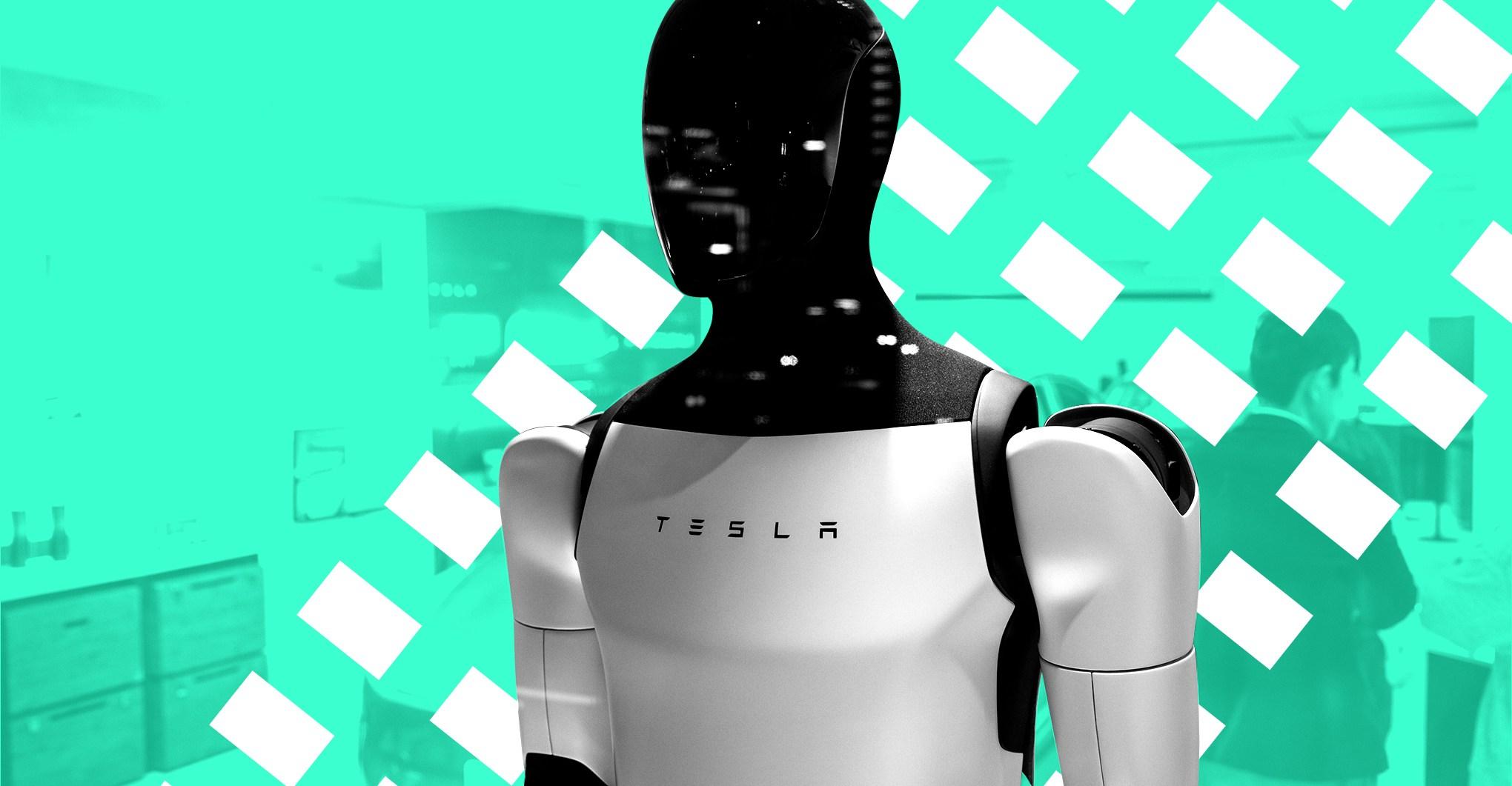
Tesla’s Optimus robot is going through growing pains
- 7 hours ago

You’re supposed to get one free doctor’s visit every year. So why are so many Americans being charged?
- 5 hours ago

Nvidia says its new AI safety platform can contain rogue agents within ‘milliseconds’
- 7 hours ago

India thump Sri Lanka, will face Pakistan for Asian Games cricket gold
- 20 hours ago

The SaaSpocalypse that wasn’t, with Atlassian CEO Mike Cannon-Brookes
- 7 hours ago

How can we create more Indianapolises and fewer San Franciscos?
- 20 hours ago

'No new MRPs': Pakistan to switch to e-passports from Oct 15
- 17 hours ago

Flock cameras are creepy. They might still be worth it.
- 5 hours ago