Euro Monitor report says the sale was set to decrease by 2% over the forecast period to 55 billion sticks.

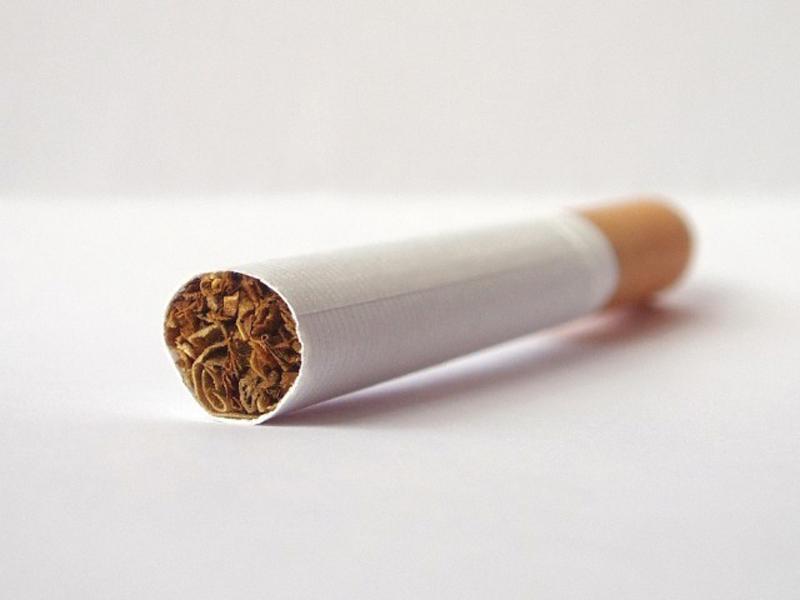
Islamabad: The retail volume sales of cigarettes decreased in Pakistan due to higher taxes and awareness amongst cigarette consumers of the potential health risks caused due to smoking, studies have revealed.
According to the Euro monitor report the retail volume sales decreased by 1% in 2022, resulting in the sale of 60 billion sticks annually, the sale was set to decrease by 2% over the forecast period to 55 billion sticks.
Euro monitor further said Pakistan Tobacco Company was the leading player in 2022, with a retail volume share of 71% in the market.
The report said following the ban on advertising tobacco products in Pakistan, and in the wake of the COVID-19 experience, there is an increasing awareness among consumers of the potential health risks of smoking tobacco actively and passively, individually or in any social setting.
Pakistan’s commitment to the Framework Convention on Tobacco Control (FCTC) underscores the importance of a unified pricing system for cigarettes to regulate the industry effectively and discourage consumption.
The WHO advocates for robust tax measures to reduce tobacco consumption, citing the effectiveness of a 10% increase in tobacco prices typically leads to a 4% decrease in overall tobacco consumption in high-income countries and up to an 8% decrease in low- and middle-income countries.
A study by the Pakistan Institute of Development Economics (PIDE) highlights the dire consequences of smoking-related diseases and deaths, with costs amounting to Rs615.07 billion in 2019, equivalent to 1.6% of the GDP.
Meanwhile, the International Monitory Fund (IMF) has recently, init study, suggested applying a single-tier tax structure on all international and national cigarette brands. Currently, cigarettes are taxed in two tiers, which is not only resulting a low collection of taxation from the cigarette industry but also resulting in 337000 deaths annually in Pakistan.
The objective of IMF recommendations is to ensure equitable taxation across cigarette products and it is widely appreciated by health advocates.

Armed Forces resolute to defeat terrorism, says Field Marshal Asim Munir
- 15 hours ago

Oil price dips briefly below $100 on Saudi exports, hopes of US-Iran diplomacy
- a day ago

Meta’s Muse is creepy, but maybe not for the reasons you think
- 16 hours ago

Bungie says it’s ‘not done with Destiny’ and will bring back vaulted content
- an hour ago

GM can’t ‘bring back’ Apple CarPlay because it never left
- an hour ago

Trump urges complete isolation of Iran, expects deal after election
- 9 hours ago

The real story of the iPhone 18 Pro’s camera
- a day ago

GM updates its trucks’ native software to coexist with CarPlay
- a day ago

Operation Shaban-2: Six terrorists killed in Saran Tangi area of Balochistan
- 12 hours ago

iPhone owners can now submit a claim in Apple’s $250 million Siri AI lawsuit
- an hour ago
England fast bowler Wood retires from internationals after battling injuries
- 11 hours ago

11 hurt as student opens fire outside Turkiye school
- 14 hours ago