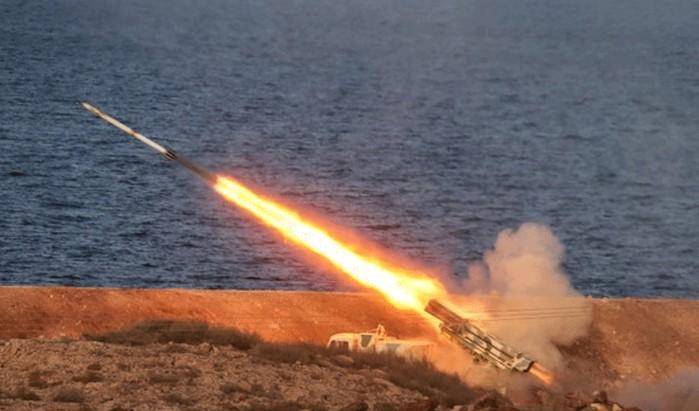
Aden has had no major warfare since bitter street battles of 2015, soon after the Yemen government fled Sanaa and made the port city its base, but it is now being hit by missile and drone strikes


ADEN (REUTERS) -- As Yemen’s Houthis push closer towards the temporary capital Aden against fragmented government forces, the city’s inhabitants face a bleak choice: stay under fire or leave for an impoverished countryside.
Aden has had no major warfare since bitter street battles of 2015, soon after the Yemen government fled Sanaa and made the port city its base, but it is now being hit by missile and drone strikes.
“Rockets are being fired into this city in a frightening way. People are in a state of constant anxiety,” said Tariq Abdul Rahman, a former soldier living in Aden with his family.
Fragmented defence
The Houthis have been on the march on nearly every front since Yemen’s civil war reignited this summer after a four-year truce. They are now only 80 km (50 miles) from Aden on the front line in the highlands to the north and 110 km to the west, along a desert road with few natural obstacles.
Forces inside Aden, perched around an extinct volcano jutting into the Indian Ocean, have set up checkpoints, pulled in reinforcements, dug trenches and set up earth barricades on roads to the front line, residents and military sources say.
But feuding among rival factions, and between their Gulf backers, has undermined the government’s efforts to stave off the advance of the Houthis and now risks hobbling its defence of the city, according to analysts.
“These forces may share a common enemy in the Houthis, but they do not share the same political objectives, territorial priorities, or willingness to fight,” said Yemen analyst Mohammed al-Basha, of the UK-based Royal United Services Institute thinktank.
As soldiers stood at a checkpoint in Aden this week, monitoring or searching cars, the only flags they displayed belonged to the former state of South Yemen that unified with the north in 1990.
Those flags – ubiquitous in Aden – show the southern groups’ eventual goal of reversing unification. But big differences between those groups have flared into violence.
Last winter factions backed by Saudi Arabia and the Southern Transitional Council, supported by the United Arab Emirates, spent weeks battling each other for control of territory. It ended with the UAE pulling out of the military coalition fighting the Houthis and a Saudi-backed faction splitting off from the STC while the movement’s leadership quit government.
The STC has not taken part in the latest fighting against the Houthis, though it vows it will defend Aden and the south if needed. Other southern factions have refused to fight for territory in the former state of north Yemen.
“On the ground we coordinate with others to defend the south and that will continue,” said STC spokesperson Anwar al-Tamimi, while criticising the effectiveness of government efforts to impose a clear command and control on the anti-Houthi forces.
However, the STC’s political demands – including a referendum on southern secession – must be addressed, he added.
“What we won’t do is send our soldiers into an offensive with no strategy and no route to a political settlement,” he said.

The case for new Democratic leadership
- 19 hours ago

The US has officially lost control of measles
- 19 hours ago

Democrats won big. Now they’re arguing about why.
- 19 hours ago

CDF munir vows to eliminate menace of terrorism in KP
- 8 hours ago

US data centers now burn more electricity than a midsized country
- 12 hours ago

Gold prices record visible decline in Pakistan, global markets
- 6 hours ago

What the midterms taught us
- 19 hours ago

The Apple Watch Series 12 is cheaper than ever ahead of Black Friday
- 12 hours ago

Voyager 1 is about to reach a mind-bending milestone
- 19 hours ago

Pakistan clinches Blind T20 Asia Cup title in Dhaka
- 4 hours ago

NationalGrid plans Rs100bn Sukuk programme to strengthen Pakistan’s electricity transmission network
- 7 hours ago

Trump’s looming nominations crunch
- 10 hours ago