
Every year, federal and state wildlife agencies in the US breed millions of fish and release them into the wild, all for fishers to catch. They do this because many ecosystems no longer support the thriving fish populations they once did, due to dams, polluti…

Published 5 months ago on Apr 23rd 2026, 7:00 am
By Web Desk
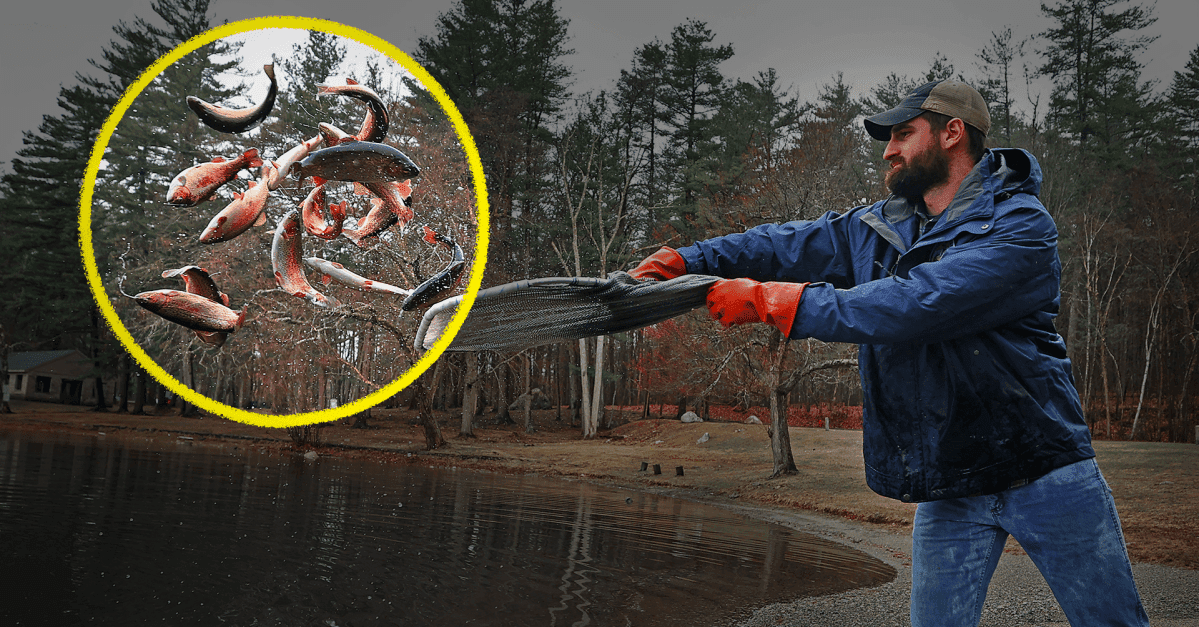
Every year, federal and state wildlife agencies in the US breed millions of fish and release them into the wild, all for fishers to catch. They do this because many ecosystems no longer support the thriving fish populations they once did, due to dams, pollution, and rising water temperatures.
But there’s a catch. In many cases, the fish that are being released aren’t native to these ecosystems. In Connecticut, where this video was filmed, the Department of Energy and Environmental Protection (DEEP) breeds and releases rainbow trout — from the West Coast — and brown trout, from Europe, Asia, and Northern Africa. Of course, states aren’t just throwing fish into the water at random. There are many preventative measures and monitoring systems in place to protect local ecosystems from the dangers of non-native species. But things can still go wrong.
Introducing non-native fish can wreak havoc on an ecosystem. So why are state wildlife agencies doing it by the million?
To see some fish stocking in action and learn more about the process, Vox producer Nate Krieger went on a fish stocking run with employees of Connecticut DEEP. In just under an hour, they released 675 live trout into the Mianus River for the recreation of local fishermen.
This video examines the strange paradox that incentivizes states to do something that, at least in some cases, hurts the very ecosystem they’re trying to conserve. It explores the complicated question of fish stocking in the US, examines the possible dangers to ecosystems, and shines a light on potential conservation benefits. Because recreational fishing encourages people to spend time outside, which builds a relationship with nature and the environment that could be invaluable for our future.
Read more about non-native fish stocking:
* Benji Jones’s article on non-native fish stocking
* Connecticut DEEP’s report on fish stocking for 2026
* Apportionments data for hunting and fishing, broken down by category and state
* “Wilderness Fish Stocking: History and Perspective” by Edwin P. Pister
* Information and great photos on “fish cars,” the train cars full of live fish that powered fish stocking in the 1800s
This video is part of a series supported by Animal Charity Evaluators, which received a grant from EarthShare.
Root takes charge, guiding England to series whitewash over Pakistan
- a day ago

Quaid-e-Azam Muhammad Ali Jinnah’s death anniversary observed
- 2 days ago

New York marks 25th anniversary of 9/11 attacks
- 2 days ago

The Supreme Court just handed Republicans a surprisingly decisive midterm loss
- 2 days ago

How the iPhone Duo compares to other folding phones
- 2 days ago

Pakistan condemns drone attacks on KSA’s East-West Pipeline
- a day ago

The one problem Trump can’t afford
- 2 days ago

CJP emphasises district judiciary’s role in building public confidence
- a day ago

Gaza film, Malkovich drama vie for Venice top prize
- a day ago

Australia Mosque in Lahore marks 100 years of Australia–Pakistan connections
- 2 days ago

The cost of youth sports is out of control
- 13 hours ago

Ashrafi receives ‘The Hubert Walter Award for Reconciliation and Interfaith Cooperation 2026’
- a day ago
You May Like


Trending


