US and Iran begin nuclear talks in Geneva as threat of war looms, Khamenei warns Trump
Iran, weakened by air war and anti-government protests, seeks sanctions relief

Published 6 months ago on Feb 17th 2026, 4:54 pm
By Web Desk
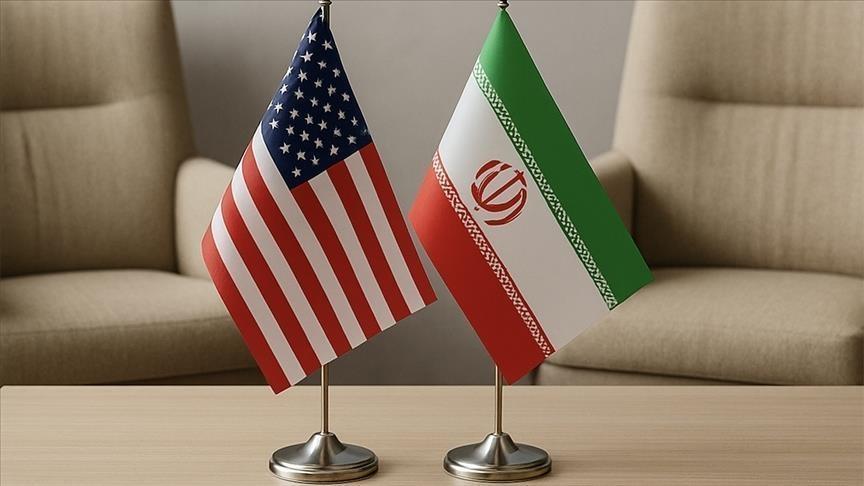
GENEVA (Reuters): Iran's supreme leader warned on Tuesday that U.S. attempts to depose his government would fail, as Washington and Tehran began indirect talks in Geneva on their long-running nuclear dispute amid a U.S. military buildup in the Middle East.
The U.S., which joined Israel in bombing Iran's nuclear facilities in June, has deployed a battle force to the region and U.S.
President Donald Trump has said "regime change" in Iran may be the best thing that can happen. Iran on Monday carried out its own drill in the Strait of Hormuz, a key waterway for oil shipments.
U.S. envoy Steve Witkoff and Jared Kushner are taking part in the negotiations, which are being mediated by Oman, a source briefed on the matter told Reuters, alongside Iranian Foreign Minister Abbas Araqchi.
Donald Trump said that he would be involved "indirectly" in the Geneva talks and that he believed Tehran wanted to make a deal.
"I don't think they want the consequences of not making a deal," Trump told reporters aboard Air Force One on Monday. "We could have had a deal instead of sending the B-2s in to knock out their nuclear potential. And we had to send the B-2s."
EVEN THE STRONGEST CAN BE 'SLAPPED'
Just after the talks started, Iranian media cited Supreme Leader Ayatollah Ali Khamenei as saying Washington could not force out his government. The republic has been ruled by clerics since the 1979 Islamic Revolution.
"The U.S. President says their army is the world's strongest, but the strongest army in the world can sometimes be slapped so hard it cannot get up," he said, in comments published by Iranian media.
A senior Iranian official told Reuters on Tuesday the success of the Geneva talks hinged on the U.S. not making unrealistic demands and on its seriousness on lifting crippling economic sanctions on Iran.
U.S. B-2 BOMBERS STRUCK NUCLEAR TARGETS
Tehran and Washington were scheduled to hold a sixth round of talks in June last year when Washington's ally Israel launched a bombing campaign against Iran, and was then joined by U.S. B-2 bombers that struck nuclear targets. Tehran has since said it has halted uranium enrichment activity.
Iran's Foreign Ministry Spokesperson Esmaeil Baghaei said Tehran's views on the nuclear issue, the lifting of sanctions and a framework for any understanding have been conveyed to the U.S. side.The meeting took place at the residence of the Omani ambassador to the U.N. amid a heavy security presence. Some cars with Iranian diplomatic license plates were visible outside.
The U.S. military is preparing for the possibility of weeks of operations against Iran if Trump orders an attack, two U.S. officials told Reuters.
Iran began a military drill on Monday in the Strait of Hormuz, a vital international waterway and oil export route from Gulf Arab states, which have been appealing for diplomacy to end the dispute.
Benchmark Brent oil prices drifted lower in Asian trade on Tuesday as investors assessed the risk of supply disruption.
IRAN-U.S. NUCLEAR TALKS UNDER SHADOW OF PROTESTS AND WAR
Washington and its close ally Israel believe Iran aspires to build a nuclear weapon that could threaten Israel's existence. Iran says its nuclear programme is purely peaceful, even though it has enriched uranium far beyond the purity needed for power generation, and close to what is required for a bomb.Since the June strikes, Iran's Islamic rulers have been weakened by street protests, put down at a cost of thousands of lives, against a cost-of-living crisis driven in part by international sanctions that have strangled Iran's oil income.
Iran has joined the nuclear Non-Proliferation Treaty, which guarantees countries the right to pursue civilian nuclear power in return for requiring them to forgo atomic weapons and cooperate with the U.N. nuclear watchdog, the International Atomic Energy Agency.
Israel, which has not signed the NPT, neither confirms nor denies having nuclear weaponry, under a decades-old ambiguity policy designed to deter surrounding enemies.
Scholars believe it does, having acquired the first bomb in 1966. Israeli journalists, circumscribed by military censorship, often refer cryptically to such capabilities or cite foreign media reporting on them.

Rogue AI agents created fake online identities in another hacking attempt
- 5 hours ago
Saudi Arabia, Turkey, Pakistan pledge mutual defence as Middle East turmoil escalates
- 17 hours ago

How video games can make young men feel less alone
- a day ago
Is the US running out of missiles?
- 3 hours ago

Thai teen kills 8 in rampage at home and school before shooting himself
- 17 hours ago
Bangladeshi cricket star Shakib, a Hasina ally, says he is ready to return home and face trial if given security
- 14 hours ago
Security forces kill 10 khwarij in KP: ISPR
- 18 hours ago
Abdul El-Sayed’s win tees up the first true swing state test for the Bernie left
- a day ago

A socialist candidate criticized Thanksgiving — and unearthed a deeper debate on the left
- 3 hours ago

Gold prices continue to surge in Pakistan
- 18 hours ago
What an Abdul El-Sayed win means for Muslim voters
- 18 hours ago
PSDF, FrieslandCampina join hands to develop climate-smart dairy skills in Punjab
- 16 hours ago
You May Like
Trending