Technology
- Home
- Technology
- News
Netflix is eating Hollywood — because it has to
On today’s episode of Decoder, I’m talking about the bidding war over Warner Bros. Discovery, which is the biggest story in the entertainment industry right now, and for good reason. It has pretty much everything you could want in a buzzy Hollywood saga — big…

Published 4 months ago on Feb 4th 2026, 2:01 pm
By Web Desk
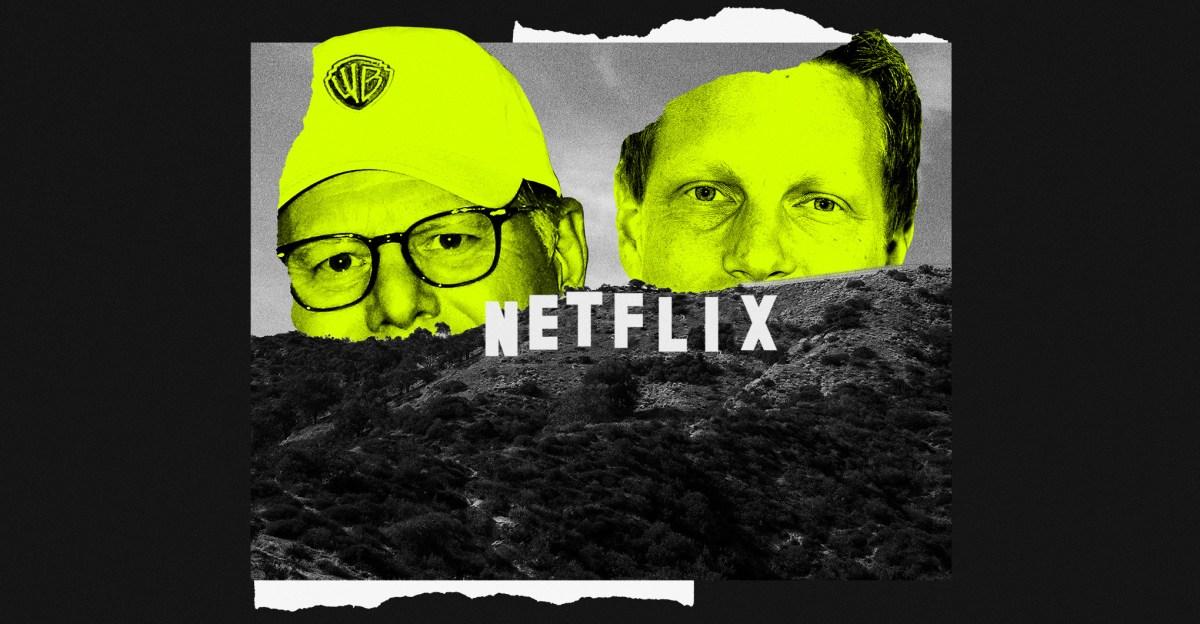
On today’s episode of Decoder, I’m talking about the bidding war over Warner Bros. Discovery, which is the biggest story in the entertainment industry right now, and for good reason. It has pretty much everything you could want in a buzzy Hollywood saga — big names, big money, and big drama.
Right now, the winning bidder is Netflix. The streaming juggernaut won the bid for Warner Bros., offering $83 billion dollars for the movie studios, but not the cable channels, to keep its content machine humming for more than 325 million subscribers.
But Paramount Skydance simply won’t go away, even though the official process is over. The company has bid, bid again, and is now attempting a hostile takeover to the tune of $108 billion for the whole package, including those cable channels. Paramount is run by David Ellison, the son of Oracle cofounder and tech billionaire Larry Ellison, and I have to say his whole vibe feels ripped straight from an episode of Succession. This man is desperate to become a bona fide media mogul, using the combination of Paramount, his dad’s ever-growing AI money, and the good graces of the Trump administration to make it happen.
[Image: https://platform.theverge.com/wp-content/uploads/sites/2/chorus/uploads/chorus_asset/file/24792604/The_Verge_Decoder_Tileart.jpg?quality=90&strip=all]
Verge subscribers, don’t forget you get exclusive access to ad-free Decoder wherever you get your podcasts. Head here. Not a subscriber? You can sign up here.
Caught up in the middle of all this are HBO, CNN, and Warner Bros. Pictures. Despite world-class brand recognition, legitimate megahits, and legendary franchises, these companies have been so historically, comically mismanaged under a long series of clueless corporate parents that the whole bundle has ended up sold, merged, or spun off into something new more times than I can count. Seriously, it’s mind-boggling how badly companies like AOL, Time Warner, and AT&T have fumbled this over the last 25 years.
To help me make sense of it all, I wanted to talk with Julia Alexander, a Verge alum and now media correspondent at Puck News who’s one of the best in the business at analyzing corporate strategy, Hollywood, and what’s next in entertainment. Julia really helped me break down why Netflix wants Warner Bros. and why David Ellison seems to think he’s got a better (or even different) strategy than current Warner Bros. boss David Zaslav. Perhaps most importantly, we also discussed how the tech industry fits into this puzzle.
Because central to the pressure facing Hollywood today, as you’ll hear Julia explain, is the battle for our attention, and that battle is being fought by everything: from video games like Fortnite and Roblox to short-form video on YouTube, TikTok, and Instagram.
Soon, all of these platforms could be flooded with cheap, endless AI video. It seems that only a few companies, Netflix chief among them, seem to have any plan whatsoever for when that wrecking ball finally hits. If you’re a longtime Decoder listener, you know I really love talking to Julia about Hollywood and the entertainment industry. This episode is no different.
This interview has been lightly edited for length and clarity.
Julia Alexander, you’re the media correspondent for Puck. Welcome back to Decoder.
Thank you so much for having me. How are you?
I’m good. I wanted you on because it feels like every day, there is new, confusing information about who’s going to buy Warner Bros. It all adds up to the same thing, which is Netflix is going to end up buying it. Paramount is going to make it really noisy until the inevitable.
I love talking to you about the streaming business, about what’s going on in the media business. I want to start with a very basic question. This is what I really want to understand. As far as I can tell, every company that has ever bought Warner Bros. has killed itself. Why does Netflix want to buy Warner Bros. so badly?
It’s a good question, and I’m sure we’ll get into our favorite conversation going back to Randall Stevenson and AT&T back in 2016, 10 years ago. But why Netflix wants to buy it is not because Ted Sarandos or Greg Peters, who are co-CEOs, truly wanted to do this. They have to do it. They’re a modern media company. They have scaled to the point that they’re going to scale based on their own capabilities.
So in order to further engagement, in order to increase retention, which is people not canceling the service, which has become the most important number to them as they hit saturation in these big territories, they need big IP, they need big movies, they need a big library, and Warner Bros. Discovery’s up for sale.
All right. That was sort of the answer that I was expecting because that is the logical answer. That’s the right answer. If you just take all the bits and pieces and you put them into the equation and you turn the crank, that’s the answer you would get. That’s the one that makes sense.
Here’s what I don’t understand. Part of that answer is just because Warner Bros. is for sale. The previous regime that controlled Warner Bros. killed itself, as all previous owners of Warner Bros. have, and they put it up for sale. So Netflix is like, “We have no choice but to do this.”
Right next to that, Netflix is doing deals with Spotify to put ever cheaper podcasts all over its service. It is making ever cheaper reality television every single day that it can. It’s doing what every big platform does, which is trying very hard to reduce the cost of content and the cost of every minute that people spend watching content on its service because the reality is it’s up against TikTok, which pays $0 for content.
That’s why I’m saying this answer doesn’t make sense. Paying a lot of money or big, expensive IP when the reality is your biggest competitor pays $0 for content doesn’t make any sense to me. How do you reconcile those two things?
I think you and a lot of Wall Street analysts feel very similarly. That’s why Netflix’s stock has been down ever since the acquisition process was started. It’s a really complicated answer. And I think that you have to look at the two worlds that are happening at once.
So in order to set where Netflix is currently and why the Warner Bros. deal is so appealing to them now, Netflix every six months puts out something called the engagement report. They basically look at how people are watching 99 percent of the content on Netflix. That equates to about 96 billion hours of content being viewed. And what we’ve seen happen over the last year and a half is a slowdown. There’s been this stagnation and engagement.
We saw this year, the most recent engagement report was released a couple of weeks ago. There was an increase of 2 percent overall engagement, but that was really only a 1 percent increase in engagement for the past six months. If you compare that to what was happening in 2020, 2021, and of course taking into account the pandemic, which really had a lot of effect on viewing on Netflix in a positive way, what we’ve also seen Netflix contend with is that the decrease in that engagement is coming from a decrease in the amount of license content on the platform.
So you’re seeing Netflix start to realize that although engagement with original content is increasing, it’s coming so at the expense of an overall household engagement decreasing.
And so if you look at the other trends within streaming, and this gets to Warner Bros., what people are spending a lot more time on is either, to your point, YouTube and Instagram, which is coming for TV sets now. TikTok, which will, I’m sure, relaunch their TV app down the line, and also the free ad-supported television services like Tubi, the Roku channel, and Pluto TV. We’re seeing huge engagement spikes in the US with those specific services. So the data tells you something very specific. People want to watch free content, obviously, and people want to watch library content, which is what these free ad-supported services have.
So if you’re Netflix, there’s two roads staring you in the face. One is the user generated content side of the equation, which is what YouTube dominates, it’s what Instagram Reels dominates, it’s what TikTok dominates, and they’re trying to figure out, they being Netflix, how to make some of those formats work on its own platform. And then there’s the other side of the equation, which is, “Can we be, eventually down the road, a $40-a-month premium offering, if we have the vast majority of licensed content that people want and original content?” So I think you’re seeing them make both bets at the same time.
Let me ask you about that split between original content and licensed content. In the before times, when we were both children and you were a Verge reporter and we were both like little babies, Netflix executives would run around and say this thing: “We have to become HBO before HBO becomes us.” This was like a rallying cry for Netflix, especially around Netflix Originals.
The idea was at that time, HBO was on a generational run. It had Game of Thrones. It had Sex in the City. You name it, HBO’s original programming drove every conversation all over the place every single day. Netflix’s goal was to program original material at that level. That’s a stated goal: “We have to become HBO before they become us.”
HBO never figured out its distribution on the internet in meaningful ways, so we can set that aside, but that was the idea. Netflix had to figure out original content as good as HBO’s before HBO figured out internet distribution. Netflix doesn’t seem to have done that. If the problem is now “we have to go license someone else’s library,” the only conclusion you can draw is, “Well, they didn’t figure out how to build their own library. They didn’t figure out how to become HBO.” Is that the synthesis of the problem, or is there something else going on?
I think that’s part of it. And if you certainly look at why Netflix could never become HBO, we often forget people in the industry that HBO was always small. HBO had a small dedicated base and it benefited from the cable ecosystem, the greatest capitalist invention in history. The idea that they could just be a part of a different service or a part of a service that people wanted because they also wanted ESPN and ESPN2 and ESPN8 or whatever else existed, meant that they could be within this system and reap the rewards of it, even if they had a very small base overall compared to what the Disney networks and the NBC Universal networks and the Paramount networks.
When you’re Netflix and you’re operating at scale, when you have 325 million global members, when you’re putting out these massive projects and trying to appeal to everyone, you can’t be HBO. And so I think part of the realization for someone like Reed Hastings, or now of course Greg Peters and Ted Sarandos was if we’re not going to become HBO, because we’re not going to make these offbeat witty comedies or these dense dramas, and that’s all we’re going to do, then we can just buy them.
HBO became much more appealing after the AT&T acquisition, then really going into the 2022 Warner Media acquisition. When they started to do more Game of Thrones stuff and spinoffs, they started to do more DC Comics stuff. They started to do a lot more genre IP, which is where they see the vast majority of their big engagement happen, on those IP shows that you can see working under someone like Bela Bajaria, who’s the head of content at Netflix, while Casey Bloys, who’s the head of HBO, can continue doing what works really well for HBO.
The thing about libraries, which, again, is the most important part of this conversation, is that it’s really hard to build up a library in the time that Netflix needs to. Warner Bros., including all the things that come with it, is 100 years old. There’s just a lot of stuff in there, including shows like ER, Friends, and the things that people really want to watch, the movies that people really want to watch. So in order for Netflix to get to that point, they would’ve had to have another 30 to 40 years to build out the library. Because of the competition from YouTube and these free ad-supported services and Instagram, you have Ted Sarandos saying, “Instagram is coming,” in a very Game of Thrones-like way, this way. I think in order to get there, Netflix, for this tech disruptor in the media space, made a very traditional media play, which was just to go and buy something and scale quickly in that regard.
Let me ask you about the library. And I don’t disagree with you, right? Warner Bros. does have a 100-year history. It has been mismanaged in all the ways it’s been mismanaged,, but the IP is there. The shows are there. The history is there. Netflix could’ve been building that library this entire time.
What is it about Netflix specifically that has prevented it from making an ER or anything with that kind of longevity? Because if I have to pick on the streamers, what I’ll say — specifically about Netflix, but I think this applies to all the streamers — is that they can’t make that anymore. They’ve lost the ability to make that. It’s like the legacy studios that still have those moves. Why hasn’t Netflix been able to do it on its own?
A big part of it is the economics. So if you look at why a show like ER, which ran 15 seasons, a show like 30 Rock, which ran I think seven seasons, any of these type of long-running shows, a big reason [for their longevity] was the advertising that supported it throughout the broadcast, and even throughout the cable system with the ads they could bring in on top of the affiliate fees they were generating. It meant that you could make bets on longer shows because you had to fill the shelf space. The ads were going to be there. You needed to have shows in order to do it.
As they built up those audiences, they could go for a longer period of time. The efficiency metric, which is a term that every content planning and analysis team will use within streaming services, the efficiency metric was much, much higher for those types of broadcast shows during the heyday of broadcast.
The efficiency is dollars out versus dollars in, right? You spend a dollar to make a show, you get so many dollars out?
Precisely. Yes, precisely. And so if you look at Netflix, up until very recently, it was staunchly against ads. And so everything it did, its whole efficiency metric was, “Are people coming in for this type of show and are they not canceling because of the show?” Something that we call acquisition and retention.
So eventually, a show in its second or third season is just going to have less overall acquisition pull. And by that point, if it’s not a phenomenal show or it’s only got four or five episodes or six episodes — Netflix loves the limited series in part because of this — you’re going to just stop making those seasons. You’re going to try a new show and go, “Well, maybe we can bring in a customer or retain a customer because of this instead.”
Now that the advertising economics are starting to come much more into play for premium services, especially Netflix, I think you will see them try to get their own ER. They tried with the show called A Pulse, and I think they had a show called The Residents, which was very procedural-y, and these didn’t really work out for Netflix. So I think they do want to build it, but again, they feel like they’ve run out of time in order to do it.
If Netflix is going to compete in a heavily consolidated market, and if it’s going to compete specifically for sports rights, which is also key to this conversation — it’s competing with companies like Amazon and Google on securing those sports rights — then it needs to be able to increase engagement and increase the amount of shows it can have ads on overnight. And this was just the best opportunity.
This is like the shift from “we have to become HBO faster than HBO can become us” to “we are competing with sleep.” It’s just there’s only so many minutes you have in the day to consume entertainment and Netflix wants to have all those minutes.
The thing that I always think about is it’s not as zero-sum as that is made out to be. Ben Affleck and Matt Damon have been doing interviews about The Rip and they were saying, “Netflix gives us notes to explain the plot throughout the movie because they know people are on their phones.” How do you think about that dynamic here? If you just want to acquire Batman for cheap and someone can watch Michael Keaton’s Batman, which has long since been paid for, right? A long since paid-for movie doesn’t matter. That can just be on in the background while you’re scrolling TikTok. Is that a win for Netflix?
If the fact that somebody can put Michael Keaton’s Batman on in the background — even if they’re playing Candy Crush or watching Instagram Reels — the fact that they still are opening Netflix to do so and not opening HBO Max or not going to something like Tubi, which may also have, is still a win. The other thing is a lot of these titles are not exclusive. So really, the option of where to get them is becoming more of a problem for a company like Netflix in this highly contentious environment for attention.
I think about this a lot with advertisers, and of course you spend a lot of time thinking about ads and talking to advertisers, and you never can promise the [return on investment], right? Even if you’re saying, “We have 325 million subscribers and we have 190 million monthly active users on our ad-supported tier,” whether or not those ads are reaching people, is unclear. And advertisers don’t know. But the fact that they are seeing engagement with something like Batman and maybe there’s four ads on Batman, the hope is that, “Okay, well, maybe somebody is watching this not in the background and they are going to look up.”
I think the question for Netflix really is whether this is going to be valuable in this race against YouTube and other potential mega streamers. They’ve also seen that threat from Paramount. The threat from Paramount was that, “Okay, if Paramount comes in and buys the Warner Bros. Discovery’s library and keeps it exclusively, what does that do to Netflix’s business?” Is this more of an offensive or defensive strategic move from Netflix? The fact that having Batman and Paramount not having it or someone else not having it at the same time that they’re trying to compete for slivers of attention with YouTube, I think is a win for Netflix. Now, is it a win at $83 billion? I don’t think that’s true. And I think that’s why the stock is down.
I mean, I have to say, I think the most offensive movie you could make with Warner Bros. is letting someone else buy it and commit inevitable suicide. That’s just me. I wanted to start there because understanding why someone would chase Warner Bros., of all companies, in this environment with this administration up against Donald Trump’s friend Larry Ellison and his son at Paramount… there has to be a good reason.
It seems like the reason here is, “Well, it’s for sale, and if we don’t buy it, someone else will, and we’re not going to make a Batman on our own and the economics of making even sitcoms that people like are out of our control. We might as well just have this library.” That’s all pretty nihilistic. None of that makes me feel great about art or the art of television, but so be it. We can come back to that in a minute. What’s the status of the deal today? Are they just going to win this one and we’ll just have to wait out more flailing?
It feels pretty done. It feels like it’s 99 percent there. I mean, obviously there’s the regulatory affair, which is where Larry Ellison and whoever else might want to help push people like the Trump administration or whoever he’s talking to and making this a little bit harder for Netflix or making it a little bit easier for Paramount. I don’t know what’s happening there, and there’s a lot of “allegedly’s” being thrown out about what that may look like.
I was just reading something about how Ari Emanuel calls up Trump all the time, and Ari’s very close with a lot of people in Hollywood, including the Paramount side. So there’s just a lot happening at the entertainment level and the Hollywood level with this administration that makes it really interesting, but the deal is done.
I think to understand about Larry Ellison and David Ellison — and David is now the head of Paramount Global — is that David Ellison went after Paramount in an attempt to then go after a company like Warner Bros. Discovery. The idea was to build this mega-streamer based on library and IP. So that’s why you’re seeing David Ellison almost act very Kendall Roy-like from Succession, saying, “Papa, buy me the train. I want to be able to have this empire.”
A big part of it is because after David Ellison bought Paramount — and this was a company circling the drain that Shari Redstone just wanted to get rid of at this point and go up the highest that she could — he knew that Paramount on its own was never going to do much against Netflix, let alone YouTube, Instagram, or TikTok. He needed Warner Bros. Discovery to come in.
So I think the fact that he went into that deal or attempted to get a deal before Warner Bros. Discovery put itself up for auction is telling. He went to David Zaslav and said, “I want to buy your company.” When Zaslav then opened up the auction process for Warner Bros. and Netflix was a key bidder, you could see how much more desperate David Ellison was becoming every single month, when he raised the bid to $108 billion to include the cable networks, which are worth absolutely nothing, and reaching out to Warner Bros. Discovery shareholders and saying, “We’re going to go in all cash and this is the best deal you can do.”
At the same time that Warner Bros. Discovery saying, “Look,” to your point, Nilay, “we are a company under duress, we are a company who believes has good assets, but we need someone else to take these assets and turn them into something and we think that’s Netflix.” You do see how important owning this part of the Hollywood Empire is to whether it’s David Ellison or Ted Sarandos because David Ellison is becoming much more unhinged in public in his attempts to get it back. But the deal is all but there, although with Trump and this administration, never say never.
You mentioned the cable networks. That is an important distinction. Netflix does not want the cable networks. Paramount has offered to buy all the cable networks. That all seems very silly to me. These things are just getting shut down in the end anyway. Does it matter who ends up with the cable networks?
No, they’ll sell to Apollo or someone to private equity, and then private equity will do what private equity does and ride it out to the end and then just dump them. But those cable networks are done.
The other piece of the puzzle, it’s funny that David Zaslav seems to be emerging as a master operator here, right? He’s pushed a bidding process for a thing that everyone thinks sucks very high, which, again, is the Warner Bros. way. The mystique of Warner Bros. can overcome any idiocy of the people who run it such that the next buyer thinks that they can do a good job. Just one of those things about Warner Bros.
This was Zaslav’s plan. Zaslav’s plan was the Paramount plan: “I’ll have a metric ton of reality slop on cable that funds high-end IP and I’ll be a famous movie guy and everyone will think I’m great.” Straightforwardly, this was his plan. They would put up matrices that said “ladies like reality shows” and “men like action comedies,” or whatever that chart was during that process, and they were going to upgrade the tech stack and merge the streamers.
David Ellison has proposed the exact same plan, right? A four-quadrant content matrix that appeals to everyone in America, and he’s going to pull together all the streaming tech stacks and find efficiency. The only new thing is I think he’s very happy for AI to write the next Mission Impossible movie, which I don’t think he’s directly proposed to Tom Cruise yet, but he’s certainly hinted at. What is different about the Paramount plan versus the existing Zaslav plan?
I think you’re giving Zaslav a lot of credit for having a plan, so that’s great. I mean, look, he’s the type of guy who came into Hollywood. He bought the home of Robert Evans, who’s a famous producer. He’s sitting behind Jack Warner’s desk. He’s throwing parties and Cannes with [former Vanity Fair editor] Graydon Carter. This is a guy who was always barely a cable magnet over at NBC and always wanted to be a Hollywood guy.
So I think he went into this striking a deal with John Stankey, who is still the CEO of AT&T. And John Stankey very clearly wanted to just get rid of Warner and was like, “Fine, we’ll give it to you.” I think when you look at the original plan that David Zaslav had for what HBO Max is, what it was, and what it kind of is today, the idea was just that if you have enough content, then you’ll be able to bring people over.
I think Paramount is very similar in that regard too, to your point. David Ellison is saying, “We just need content. We just need to have enough of it that people are willing to spend more time here.” I think if you look at the Netflix side of the equation and they’ve pointed out some really interesting details and data, obviously coming from their side, about why this is such a great deal, that I think does address some of those concerns, which is that there’s already a strong overlap between HBO Max and Netflix subscribers. So the engagement is going to be there, unlike Discovery and HBO customers, which are on opposite sides of the equation.
Now, you’ve got Netflix coming out and saying, “We think that we can do a better job with IP formation and supporting IP and bringing this out to our global subscribers. We think we can do more with these IPs in different languages and different areas. We think we can do more with this opportunity for HBO in our international markets because of the collaborations that we have with different production companies.” So they’re already addressing a lot of the issues that Zaslav and Ellison’s plans failed to address.
I think where you see David Ellison really coming in and saying, “Well, here’s how we’re going to build on what David Zaslav is doing and do it in a more helpful way,” is of course the other big debate at the center of this, which is the theatrical component and who is more committed to the theatrical release. To the rest of the world, that might not matter much just based on the data of how little we are going to movie theaters these days, but to Hollywood, that is a central debate.
Because that’s where the money is, right? Or where the money was and hopefully the money will be again, right? You buy a ticket to a movie, that’s a very high price compared to a month’s subscription to Netflix. That money might get distributed differently. Is that the only reason people care about theatrical or is it just the idea of movie theaters?
There is certainly the nostalgic factor. I mean, it’s a group of creatives built on nostalgia. I do think, and we have a lot of sentiment analysis data looking at this over the past few years, that movies released in theaters are more memorable to audiences. I mean, a big part of that is the marketing push that accompanies it, and so people are just more aware of it.
But we see that engagement from theatrical releases on streaming is also much higher than streaming originals. And so to your point about money and why Hollywood would be interested in this, it’s really hard to build yourself to be the next big Leonardo DiCaprio or Scarlett Johansson if you’re not in theaters. So I think this component of we have a nostalgic love for movie theaters, we want these more communal events, but we also don’t want to be relegated to Netflix slop in an era of AI slop and that’s a big reason why I think you saw parts of Hollywood look at Paramount and David Ellison originally as the savior of Hollywood.
I think now, once people have started doing the math on it, they’ve realized that that would mean Paramount had to release a movie almost every other week, which is an impossible load for a company like that to do. Precedent, by the way, from the Disney Fox deal tells us that that was never going to happen, as we’ve seen happen with Fox Searchlight films going direct to consumer for a lot of them. So I think it worked out in Netflix’s favor with them saying, “We’re still committed to theatrical.” Even if they’re not, it’s giving Hollywood enough time to process what may or may not happen, knowing that Paramount is a little bit less likely to come through.
Yeah, I think the last commitment I saw from Netflix was a 45-day theatrical window, and even that’s a pretty soft commitment. That’s not written down anywhere. That’s Sarandos saying, “Yeah, a month and a half, then it’s just Netflix again.”
Let me ask you this question again though, because I think I’m getting it, but I just want to try one more time. What is actually different between Paramount’s plan and the Warner Bros. discovery plan? Because it feels to me like a bunch of cable channels that are dying, subsidizing a bunch of IP that no one has a plan to actually execute on, but the person at the top just wants to be a Hollywood guy.
Yeah, there is no difference, and in part because they have the same businesses. They’re coming from the same position. The only difference is that David Ellison has a personal bank from someone valued at a couple hundred billion dollars who can come in and say that his father, Larry Ellison, will just continue to fund this. But there’s no discernible difference between what David Ellison wants to do, at least that he’s publicly said, versus what David Zaslav tried to do for the last few years.
I think if you compare the eras of like Warner Bros. and Warner Media and Warner Bros. Discovery and whatever else it’s been over the last 20 years, I think when you look at it, the only person who really came in and said, “I have an idea for what we want to do to make this a differentiated company,” was Jason Kilar, who was this technologist futurist who was the CEO of Warner Media for a couple of years. But he also damaged the reputation of that company with Hollywood.
That’s because in the pandemic he said, “We’re going straight to streaming with every movie.” I think he forgot to soften the blow by saying, “And then when the pandemic is over, we’ll stop that.”
[Laughs] Yeah, he’s more Silicon Valley in that way than he is Hollywood, but I think if you look at what he tried to do with the Warner Media assets, he said, “We should have a CNN streaming service.” That was CNN Plus, and that didn’t go anywhere. It launched for a couple of weeks and then it was shut down. And so what are they doing now? Mark Thompson, who runs CNN, has launched a streaming service.
So this idea of what Jason Kilar wanted to do, which may or may not have worked long term, I think was the last point that there was a plan to do something on the innovation side with the assets as a opposed to just collecting more assets, and under Zaslav and under Paramount’s plan, it is just a collection of the assets.
The part of the Ellison plan that is somewhat different is the presence of his father, Larry Ellison. A lot of the argument for why Paramount should get the deal over Netflix is that Larry Ellison exists. I mean, straightforwardly, they’re like, “But we have a rich guy. Look at how rich this guy is.”
I’m looking at that and I’m talking to our reporters, especially Liz Lopata, about that. It seems bananas to me that Larry Ellison, whose wealth keeps increasing every day with the hype bubble surrounding AI, wants to trade out of AI money, wants to trade out of Oracle stock, to backstop media money, which is among the most under pressure, undervalued in the market. If I have Oracle stock, I would not be like, “You know what I should do with it is I should buy Warner Bros.” That’s not rational.
Why do you think Larry Ellison is willing to backstop a Warner Bros. deal with his own Oracle stock?
A couple of different theories on this and they get more outlandish and sub-Reddit-y as they go on. But there’s part of me that sees almost as parallel to what Larry Ellison might be thinking of doing — and I don’t speak to Larry Ellison on the regular, so I’m really just projecting here.
But what he might want to do is similar to what AT&T originally bought Time Warner for, which was this idea that things are happening on phones and we want to have some level of investment in TikTok. We want to have some level of investment in what people are watching and can we create some integration using the cloud computing aspects that we have to make this so that we collect a lot of data. So we collect a lot of data and we do something with this. Down the road, what actually is worth the gold bars is not the content, but everything we’re collecting around that content, which is a very Mark Zuckerberg and very Sundar Pichai-style of thinking. This is where a lot of the value of what we do comes in.
But the issue there is you have to have people on these platforms. In order to collect that amount of data to make it valuable, in order to find what’s really fascinating or interesting and worth doubling down on investment-wise, you have to have the audience. And Paramount Plus, even with a combined HBO Max, makes up a sliver of attention and engagement in the United States. Both of them barely have any global presence. They don’t really have any global-owned and operated presence because all their streaming platforms are in conjunction and partnership with other companies and other distribution platforms in order to try and scale.
TikTok was down apparently this past weekend in its first US-owned debut. So whether TikTok has the staying power now versus whether people go over to Instagram or YouTube shorts, that question of who ends up winning that short form battle, I think makes it really questionable. But I agree with you. I don’t think someone as clearly smart as Larry Ellison looks at a decaying asset in a decaying industry in a hyper-competitive attention ecosystem and goes like, “Yeah, this thing’s worth more than $100 billion.”
By the way, we’re going to go to Warner Bros. Discovery shareholders and say, “You’re going to get a bigger payout basically, and you should go with us and don’t worry about the rest of this business because you’re going to get paid out for it.” I don’t see why he would do that unless there’s something far more compelling within what the assets will help generate down the road that are not just pure engagement of people watching Michael Keaton’s Batman because the only other answer is he’s a dad with guilty father issues.
I will say the only things you can do with data at that scale are target advertising or send drones to kill you. And I don’t know which one it is. It is unclear, but that’s what you can do with the data. There’s not much else with data at scale and I’m not sure Paramount has that ad business. I’m not sure that if you combine Paramount with Warner Bros. and add it to TikTok that you get that ad business. That’s not really TikTok’s ad business either. There’s just a set of question marks there.
I agree. I agree completely. I think it’s a desperate attempt, especially in this Meta and Google age, just when it feels difficult to even try and compete at that scale. Then again, looking at Netflix or even Disney, Disney streaming services have pretty strong engagement. They’ve got active subscribers. They’ve got a pretty active ad base. And Disney is famously very good at advertising. It just has a great ad business.
So you’re coming in this late to the game on a Hail Mary in the hope of having enough movies and TV shows and enough sports — Paramount just paid $7.7 billion for UFC, which just debuted on their platform on Saturday. And you have enough overlap, maybe with TikTok. And even that is a huge question. It becomes further unclear as to why this is the deal to make.
I was talking to an analyst and I said, “If I had $110 billion in cash” — and I do not — “but if I had that, I would be looking at Epic Games or I’d be looking at Roblox. I’d be looking at other areas where there seems to be deep levels of engagement and deep levels of young consumers.” Let’s say they’re the emerging 15-year-old or 16-year-old consumer base, where you’ve got a lot of brands like FIFA who want to partner with you, Disney who wants to partner with Fortnite.
I don’t know why I would be spending all my efforts on Warner Bros. Discovery, unless I deeply love my son, and this is what my son really wanted. He wanted to do this. And if that’s the basis for why Paramount is upping their bid and acting so dramatically and publicly about it, that should be far more concerning to shareholders than anything else.
Let me ask you about the other side of this, the Warner Bros. side. They keep rejecting Paramount. I think they’re up to eight times the board has said no to Paramount. Is it just the stink of desperation or is the Netflix deal that much better?
I think the Netflix deal includes some kind of optimism for the future. I think the Paramount deal is a last ditch effort to cling to relevancy. I think shareholders know that, especially shareholders who have been, by the way, with Warner Bros. Discovery this long. There were a lot of exit points that they could’ve taken and just said like, “I’m going to get rid of this. I’m not going to be here.” Obviously, many of them are hoping for a big sale at this moment, but I do think Netflix has a coolness to it.
I was talking to this media investor a while back and we were talking about knowing when to sell. The thing they said to me, and they work with a lot of notable athletes, they said, “My biggest concern is you have founders and CEOs who do not want to sell because they think that they’re still riding the level of cool, but cool is a very quick factor that goes away.” So you have to know when, “Okay, this is my off-put and I’m going to go here.”
I think there’s a level with Netflix where they are still riding that cool. They think this could be a really big business. It’s exciting to see it play out. This is the first major acquisition that Netflix has done. The biggest one before this was for the Roald Dahl library for more than half a billion. That’s up against the Paramount side, where the cool has been gone for years, or for decades even.
So again, it just feels like Netflix seems to have a better plan. How much they stick to, to your point, we don’t know. How much do they actually stick to it beyond what they’re contractually obligated to stick to? Who knows. But the fact that they have the big movies and the big TV shows and they’re the number one premium streamer I think really does do a lot for shareholders.
When you think about the reception that these various studios and these various deals got in Hollywood, there has been a pretty quick flip, right? There was an immediate reaction to Netflix from Hollywood that was pretty negative. I think Hollywood did not want Netflix to consolidate even more power, to have even more influence over creative, and then Paramount showed up and suddenly Netflix, like you said, seems cool again.
Why don’t people want Paramount? You have a billionaire nepo baby who just wants to make big-budget movies and he’s going to spend his dad’s money to do it. Why aren’t more creatives trying to butter him up to get that cash?
It’s two names, and they’re heavily related to entertainment in a way that Hollywood detests, and its YouTube CEO Neal Mohan and OpenAI CEO Sam Altman. At this point, Netflix is cool because Netflix has proven that it’s committed to, maybe not theatrical, but committed to filmmakers. They took on The Irishman, the big Martin Scorsese movie, when no one else would do it. They’re obviously committed to the television side of the equation and they produce a lot of really great TV. No one’s ever doubted that.
At the same time, when they first came in and they were the disruptors and they were disrupting the theatrical model and how writers and actors get paid on the TV side of the equation, it was scary because people don’t like change and Hollywood is especially antiquated in its approach to things. So they especially don’t like change. Then at the same time, Netflix hit 10 to 11 years of producing original content and proved itself.
But then Sam Altman came in and was like, “We’re going to take people’s likenesses and we’re just going to let people do what they want. And the next Star Wars movie is going to come out of Sora,” or whatever. And Neal Mohan is going out and saying, “By the way, television is YouTube. We’re premium content. Our creators make premium content. We make up the vast majority of engagement on TV sets. We know that 10 years ago, less than that, you were worried about antisemitic content on our platform and now we’re the future of TV partnered with the NFL and the Oscars.”
But I think when you look at that deep concern about Silicon Valley’s encroaching impact on the traditional media business, you have a lot of traditional media players who say, “Okay, well, who’s our best bet? Who’s our best guy?” The best guys at this point are Netflix and Disney.
And so if the fight is like, “Well, we’d rather Netflix have Warner Bros. Discovery and that creates enough engagement to continue supporting the artistic community so it’s not just [YouTuber] Mark Rober and Mr. Beast on Netflix and Amazon, then we’re going to support that versus the guy who we don’t know can get this through.”
So it’s basically just doubt, right? It’s doubt that David Ellison can compete with YouTube, and compete with any disruption from AI. I mean, to be clear, David Ellison keeps waving at AI as though it’s important. I don’t know what he thinks is important about AI, but he keeps gesturing at it as though something will happen and he’ll be cool because of it. Do you know what David Ellison thinks about AI? Because I have not been able to figure it
Oh I think it’s whatever Bob Iger also thinks about AI. Well, maybe not because I think Bob Iger looks at OpenAI and says, “Man, imagine if [the entertainment industry] didn’t sue Google and YouTube in 2007, and instead just asked for a stake in that business and what that would’ve become.”
I mean, I would love to know what David Ellison thinks about AI. I think he’s a guy who deeply does love technology. If you read through the letter he sent to staff when the Paramount deal was first done with Skydance, he used the terms “tech” and “technology” more than film, television, entertainment, streaming. He loves technology. What he thinks he’s going to accomplish by loving AI — beyond the enterprise side of it, beyond using this for Microsoft Word or whatever, and including it in more original content at a time when there was the longest writer and actor strikes in a very long time because of artificial intelligence less than two years ago — we don’t know.
I don’t know what he’s going to think that he’s trying to accomplish, but again, he’s a guy who’s making a lot of manic moves very publicly. I think that’s off-putting to a town very well known for keeping up a very stoic face at times and moving slowly through technological changes.
If David wants to come on the show, I’d love to ask him what he thinks the word technology means specifically. I also would put that right next to, “You’re trying to buy a library of content made before any of this technology existed because the thing that audiences find valuable is well crafted things from the past, and there’s no evidence that all this technology can make a well-crafted thing in the future.”
In fact, most of the AI slop that I see trades on the IP of the past. Sora does not explode into public consciousness unless you can make Michael Jackson do things. You need literally a monoculture figure to make the AI seem relevant, otherwise you just have pure slop, which no one cares about. I’m unclear. Like I said, David, if you want to come on and tell me what your plan is, I would love to hear it.
Let me end by asking one of the more Julia questions I can think of. We keep talking about these things like they’re different businesses and they have different scopes, right? YouTube versus Netflix versus TikTok versus whatever. It feels like the pressure is making them all the same business.
So if you’re like, “I don’t like what Neal Mohan is saying as CEO of YouTube, I’m going to place my bets on Netflix,” that feels divorced from the fact that Netflix is just another app on your phone that is soon to introduce vertical video scrolling as a discovery mechanism to get you to do whatever next transaction they’re going to do. That is divorced from the fact that Amazon has live shopping notifications in its app today, and that is right next to Instagram turning itself into some sort of chaotic AI-powered QVC.
They all have the same economics fundamentally compared to what used to be TV, where you had your cable carriage agreements and you’re guaranteed advertising and that sat next to movies, which had a theatrical window and then a pay-one window. They used to be radically different businesses with different economics and they produce different art. Now, all of these feel like the same business to me right now, no matter what. How does any of that get differentiated ever again?
The word that gets passed around a lot in different executive meetings is “quality,” and not in the sense of we need to protect quality, but more from the nihilistic point of view of does quality matter? Only a little while ago, no one thought YouTube was TV, and a lot of these Hollywood executives still thought it was just cat videos up until the Nielsen Gauge started breaking out YouTube consumption on TV sets. People are worried that if quality doesn’t matter and it’s just scale, then how do you play into this? It wasn’t a concern until, as you just perfectly outlined, the ad dollars were going across all these same platforms.
It used to be that Netflix — or even back in the day, Disney and CBS and whatever it might be — had one level of ad spend. And then there was search ad spend and then social video. Now, all of these companies have started to realize that where the real money is going to be over the next few years, outside of the mobile social space and the e-shopping space happening inside these different apps, is on connected TV sets. We’re spending more time with their connected TV sets, so the amount of dollars that is left over from linear as they move over to CTV is very, very, very high.
That’s why the Nielsen Gauge has become this big problem in Hollywood because YouTube can use it to say, “We want these bigger TV ad deals, and we can work with our creators, and the brands, and podcasts because those are playing out on TV living room sets now.” It’s what’s encouraging Instagram CEO Adam Missari to say, “Let’s be on TV sets.”
It’s also what’s concerning the Netflixes and the Paramounts and the Warner Bros. of the world. Because if they can’t rely on that guaranteed collection of revenue going to their services now you’ve got these big disruptors coming in, then they have to find out ways to either lean into the lower quality content that people seem to want. And that’s not a dig on YouTubers, I’m saying it’s just on average how they think of it. Or go the other way and be super high premium content.
So going back to what we started this conversation on why Netflix wants Warner Bros. at the same time it wants podcasts, they don’t know the answer. They don’t know. They don’t know if the idea is to go $50 a month in 10 years and have the best quality stuff in the world, and that’s the differentiator in a world of AI slop, or if they should have more podcasts and more UGC videos in order to glean onto that audience.
So I think we used to talk about attention across all these different formats as something completely different, but the reality is that all of those little slivers of attention that Netflix once thought it could have are completely melded into each other. Now, all that’s left is crumbs. They’re fighting for crumbs. And so the fighting just means that it went from being, “Maybe we’ll bid on a Martin Scorsese movie,” or, “We’ll bid on the UFC,” to now, “We’re actually going to spend $83 billion in order to protect our future.” This is the most expensive defensive bet in entertainment in a very long time.
The last outstanding piece of this puzzle is regulatory approval, which we’ve been hinting at throughout this conversation. Obviously, Larry Ellison is a big Trump supporter. David Ellison, his son, made enormous changes at CBS News after buying Paramount. Trump seems very pleased with them. In classic Trump fashion, he’s not even hiding the idea of a quid pro quo. He’s just saying to the anchors of CBS News like, “I got you your job.”
It feels very obvious that Warner shareholders want to go with Netflix. The Trump administration could get in the way of that, right? The Federal Trade Commission could say, “We’re initiating an anti-monopoly review.” They could push it towards Paramount. Does that seem likely to happen? Is Netflix ready for that outcome?
Netflix is super ready. They had an earnings call a couple weeks ago. They seem to feel pretty confident, although how much of that is just public posturing, we never know. What I will say is they’re sowing the seeds very, very well by saying, “If this is a conversation about premium video, then yes, we are the biggest.”
But to your last point, Nilay, what is video in 2026? And so they keep pointing out that YouTube has an advantage and Instagram has an advantage.I think the case I keep thinking about regarding the regulatory component is the recent FTC-Meta case, here Meta said, “People come here not to connect with friends. They love video. They love watching stuff.”
Now if you’re Ted Sarandos and Greg Peters, you’re like, “Thank God. Because now we can say that people are spending time on Facebook watching videos. They’re spending time on Instagram. Instagram is coming to TV sets.” So they can point to YouTube’s growth, where if you look at a chart of Netflix versus YouTube in the United States, Netflix has a very little slope in terms of increased engagement and YouTube is on a huge swing upwards on TV sets.
So I think if they can look at the precedent of “what is video?” on all these major distribution platforms, which Facebook is now a part of, Netflix has the advantage of being able to say that it’s competing against all these players. But of course, again, as we said earlier in the Trump administration and the Trump era, never say never about how this could go.
Do you think if Netflix buys Warner Bros., it will succeed where literally every company in the past has failed?
I think it will ultimately, similar to the 2019 conversation about Disney and Fox, be that it was probably a good thing to own. But they probably should have done it at half of the price. And somehow David Zaslav and Rupert Murdoch are the two that came out swinging and winning in this world. But I think it’ll do well for Netflix because it has the audience and it will be vastly, vastly overpriced in three to four years when we look back at that deal.
Julia, this has been great. We’re going to have to have you back soon. Every time I talk to you, I feel like we should just do this every single week. I assume there’s going to be more twists and turns in the saga, so we’ll have you back real soon.
Absolutely.
Questions or comments about this episode? Hit us up at decoder@theverge.com. We really do read every email!
Decoder with Nilay Patel
A podcast from The Verge about big ideas and other problems.
SUBSCRIBE NOW!

How to pray when you don’t believe in God
- 12 hours ago
Iran war: PM Shehbaz signs Islamabad MoU as mediator
- 4 hours ago
Schlage’s UWB-enabled smart lock launches this month
- 5 hours ago
US and Iran presidents sign ceasefire agreement, but Trump says he could still resume attacks
- 4 hours ago

Amazon’s data centers used 2.5 billion gallons of water last year
- 5 hours ago
Trump just found the worst way to regulate AI
- 3 hours ago
The Weather Channel app now predicts bad allergy days
- 14 hours ago

10 things Elon Musk can — but probably won’t — do with $1 trillion
- 12 hours ago
Why the Supreme Court is fighting over deadly gas and firing squads
- 12 hours ago
Ghana beat Panama 1-0 in World Cup opener after injury-time winner
- 4 hours ago
PSX gains nearly 900 points amid Iran-US interim peace deal
- 2 hours ago

Roborock’s Q10 S5 Plus robovac is over half off, matching its best price to date
- 5 hours ago
You May Like


Trending